Introduction
If an installer suggests putting a 5 kW inverter on a 10 kW solar system, it may seem like the inverter is under-sized and the return on investment would be less. But is this really the case?
In this article we will see that on an east-west roof where the panels generate power more evenly through the day that a smaller inverter may have much less impact than you think. This case study looks at whether that smaller setup really hurts the savings and return on investment.
The main assumption is based on the household not having really power hungry devices like power-showers which can consume more than 5 kW (or that these devices are used infrequently).
These reports were modelled using our solar calculator: open the free Solar Butter solar calculator, which is free to use with no sign up required.
Assumptions
- 20 DMEG 495 W panels split 10 east and 10 west, about 9.9 kW total array size
- 10 kWh battery storage
- 5,500 kWh/year household electricity demand
- Fixed tariff: 28p import, 12p export, 60p/day standing charge
- The two reports use the same roof, battery, tariff, demand, and weather-year assumptions
- The only intended change between the two scenarios is inverter size
- For the specific inverter Alpha ESS SMILE G3-S5-INV, a 10 kW array on a 5 kW inverter is permitted because the datasheet allows 10 kW max PV input, so the max DC/AC ratio is 2.0
That last point matters because not every 5 kW inverter allows this much PV oversizing. It is absolutely required to check individual inverter parameters to check suitability. Most inverters might only accept a DC/AC oversizing factor of 1.3. This example uses a factor of 2.
The simulation uses hour-by-hour averaged weather data rather than second-by-second cloud movement, so real clipping on individual sunny days may differ slightly from the model. The report also assumes that no high-load devices are present such as power showers, as a larger inverter would give additional benefit in these instances. It is always best to check peak-load in any household and it's frequency/ duration.
Scenario 1: 10 kW array with 5 kW inverter
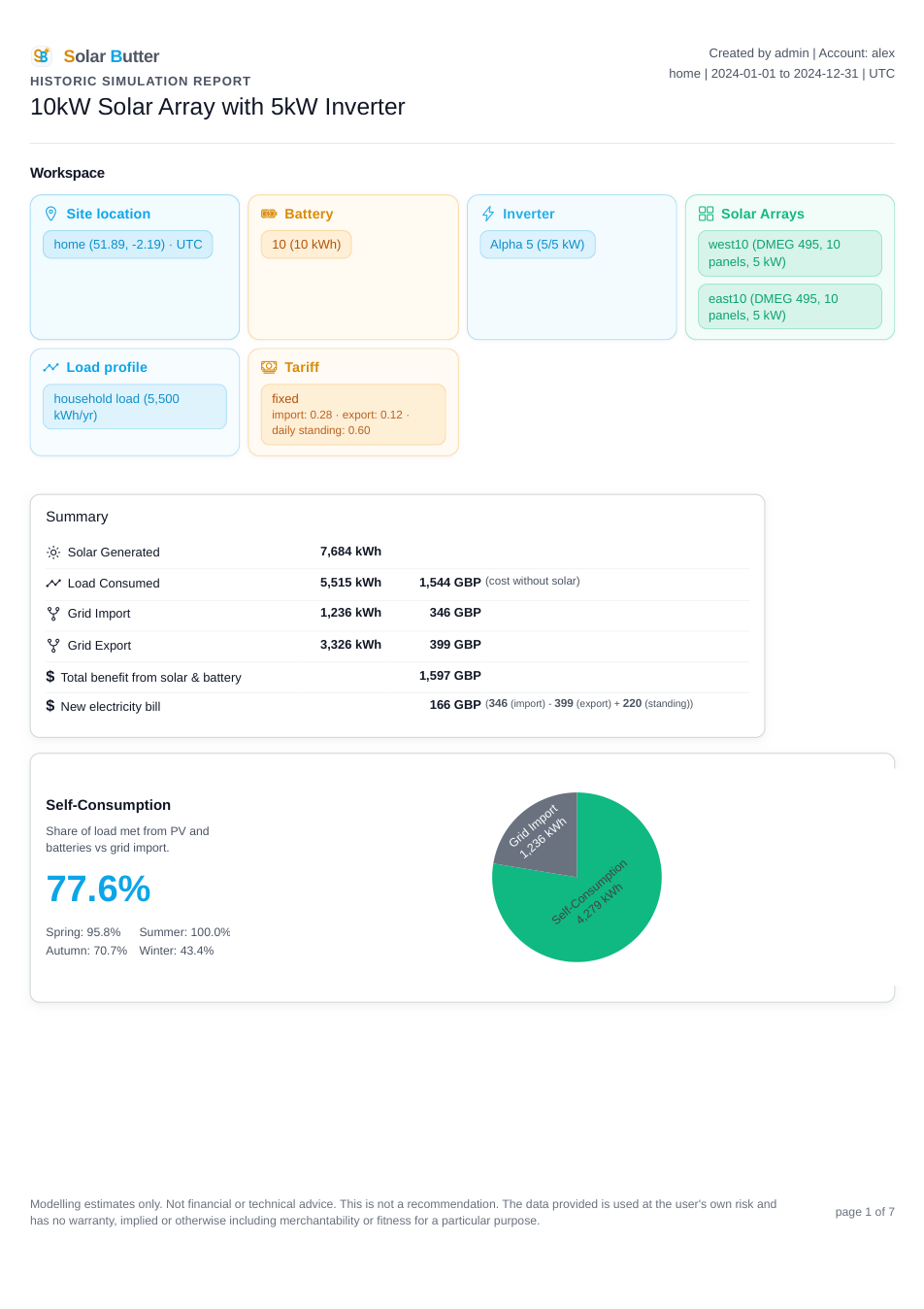
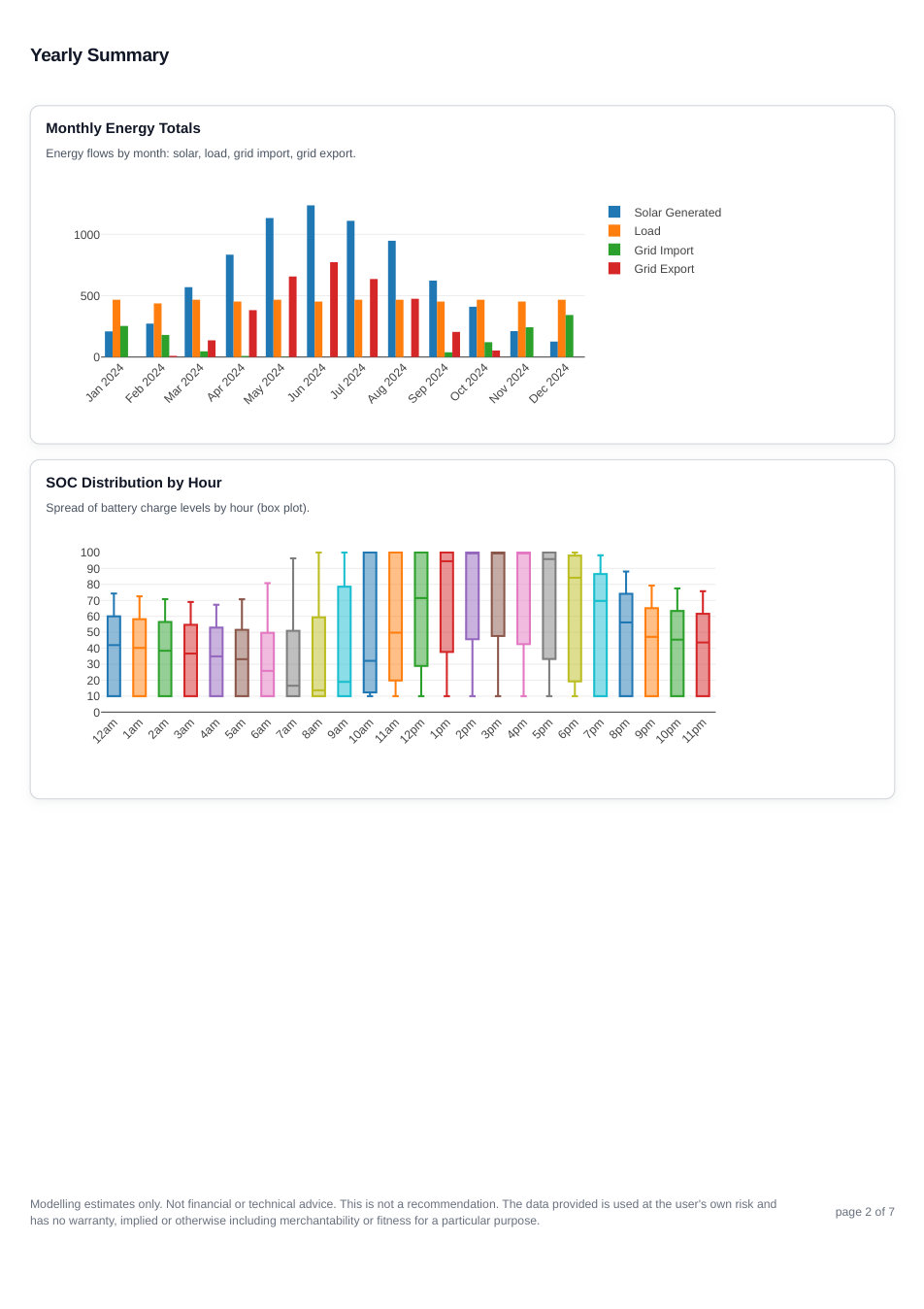
Outputs
- 7,684 kWh annual solar generation
- 1,236 kWh grid import
- 3,326 kWh grid export
- 4,279 kWh self-consumed from PV and battery
- 77.6% of annual load met by PV and battery
- About £1,597/year total benefit from solar and battery
- Modelled electricity bill of about £166/year
On first glance, a 5 kW inverter against a 10 kW array can sound heavily undersized. But on this roof the east and west arrays are facing in different directions, so the DC peak is far broader and lower than it would be on a single south-facing roof.
Scenario 2: 10 kW array with 10 kW inverter
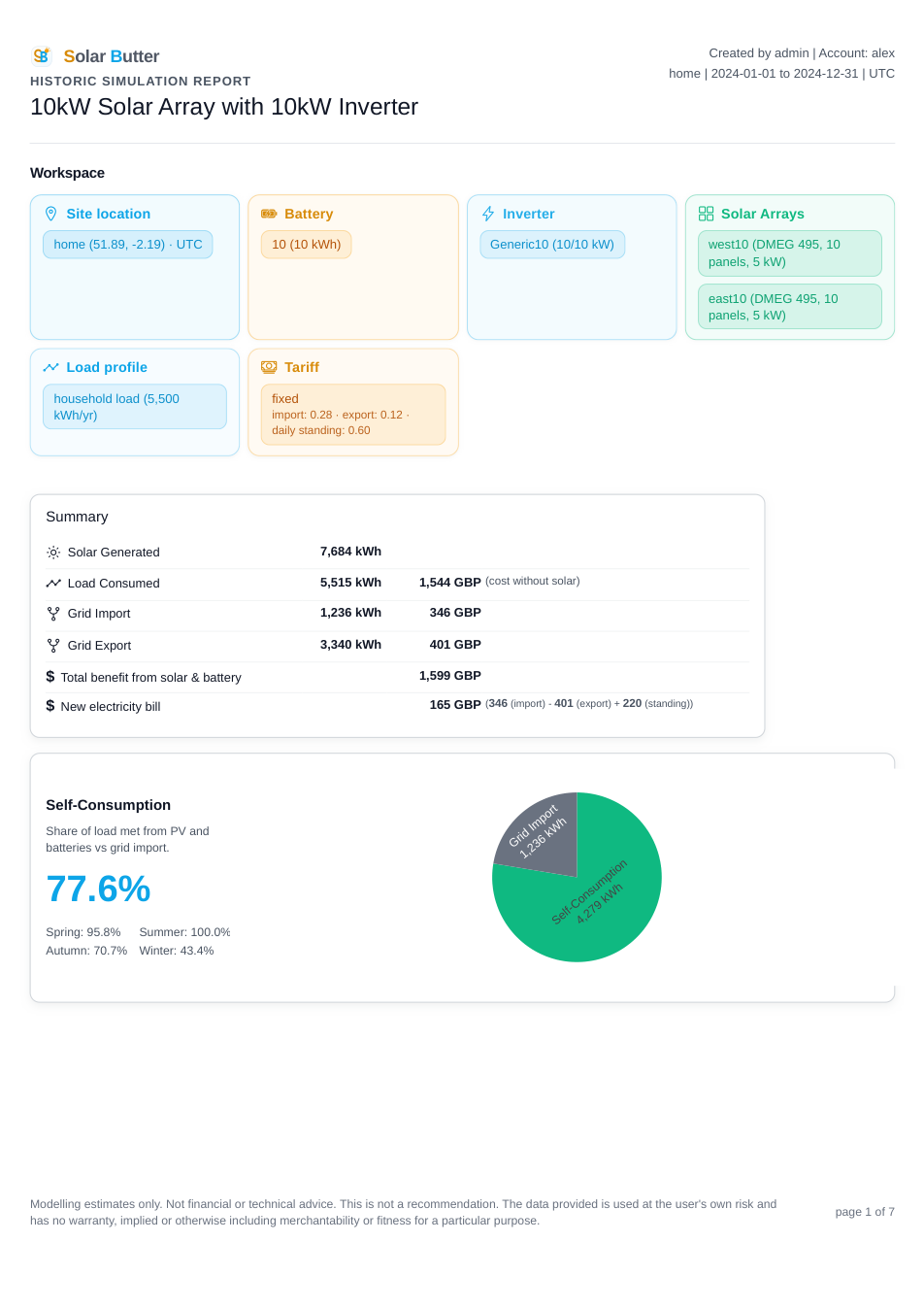
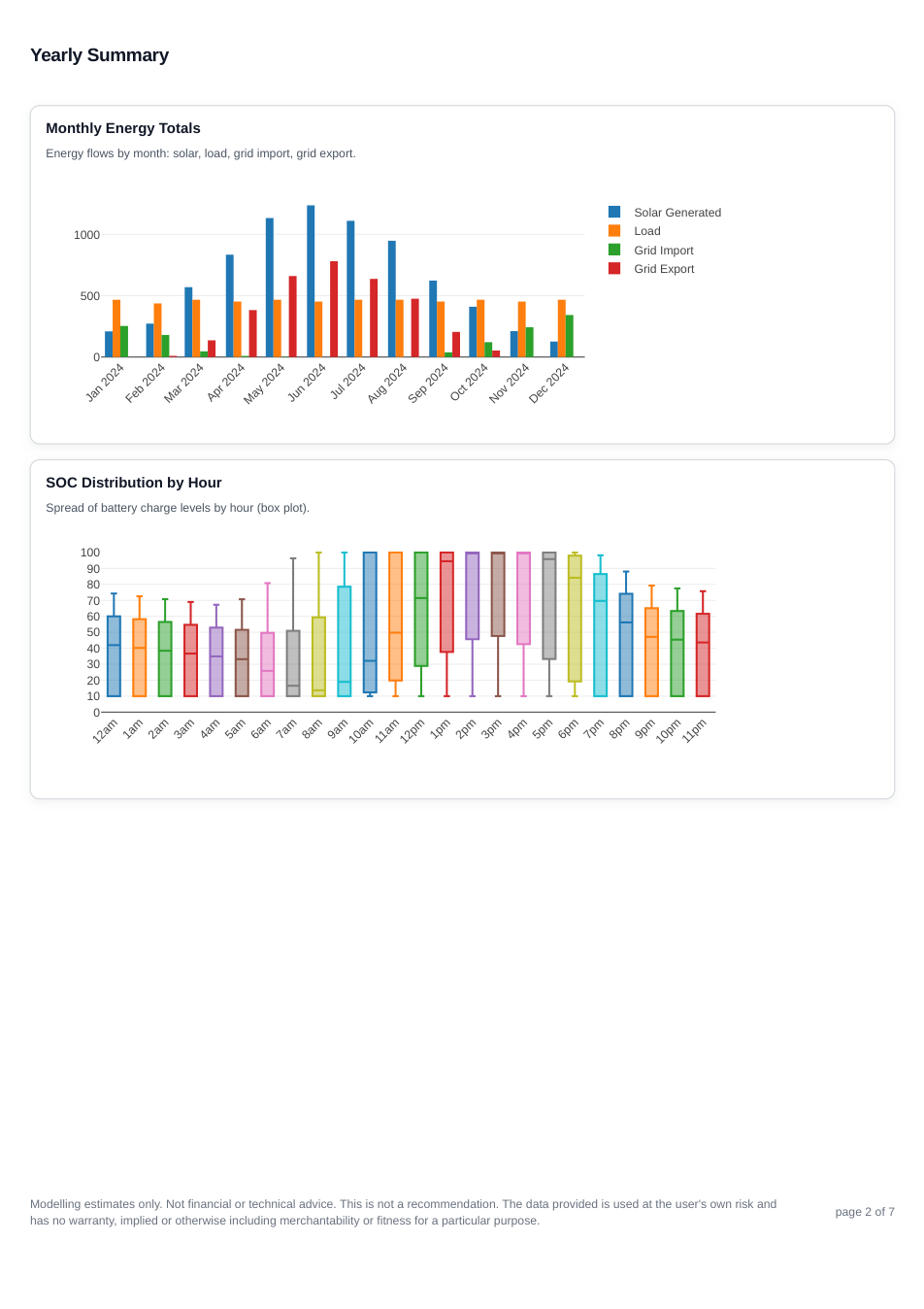
Outputs
- 7,684 kWh annual solar generation
- 1,236 kWh grid import
- 3,340 kWh grid export
- 4,279 kWh self-consumed from PV and battery
- 77.6% of annual load met by PV and battery
- About £1,599/year total benefit from solar and battery
- Modelled electricity bill of about £165/year
Comparison
£1,597/year benefit
7,684 kWh generated, 1,236 kWh imported, 3,326 kWh exported.
£1,599/year benefit
7,684 kWh generated, 1,236 kWh imported, 3,340 kWh exported.
About £2/year
The larger inverter adds only about 14 kWh/year of export in this model.
For this scenario the larger inverter only improves export by about 14 kWh/year and total benefit by about £2/year, and no change to self-consumption proportion.
That tiny difference makes sense physically. In an east/west configuration, one roof face is stronger in the morning and the other later in the day. The sun never shines intensely on both roof faces at the same time, so the inverter is only trimming the very top of the broadest peaks rather than chopping off large chunks of energy.
That is why export is not reduced by very much here. If this had been a single large south-facing array, the same DC/AC ratio would usually deserve more caution. On east/west, it is much easier for a smaller inverter to look sensible.
| Scenario | Solar generated | Grid import | Grid export | Self-consumed solar | Export income | Total benefit | New bill |
|---|---|---|---|---|---|---|---|
| 5 kW inverter | 7,684 kWh | 1,236 kWh | 3,326 kWh | 4,279 kWh | £399/year | £1,597/year | £166/year |
| 10 kW inverter | 7,684 kWh | 1,236 kWh | 3,340 kWh | 4,279 kWh | £401/year | £1,599/year | £165/year |
There is also a practical approvals point. A smaller inverter can be favourable for DNO approval because the AC export capability being declared is lower, even though the roof has more PV on it. That does not guarantee an easier approval in every case, but it often helps.
Install?
For this exact system, the 5 kW inverter looks sensible. It is permitted on the Alpha ESS SMILE G3-S5-INV, it suits the east/west roof shape, and the modelled ROI difference versus a 10 kW inverter is almost negligible.
In other words, if the goal is annual bill reduction and export income on this particular layout, the smaller inverter is not doing meaningful damage to the economics.
The caveat is power, not annual energy. If the household has large instantaneous loads such as electric showers, a larger inverter may still be worth it because it can support more power at once rather than leaving those short peaks to the grid.
The same applies to battery charging. If the battery is much larger than 10 kWh and the off-peak charging window is short, a larger inverter may be useful so more energy can be pushed into the battery overnight. In those cases, the argument for a bigger inverter is about peak power and charging window constraints, not about recovering a meaningful amount of lost export.