Heating
Heat pumps
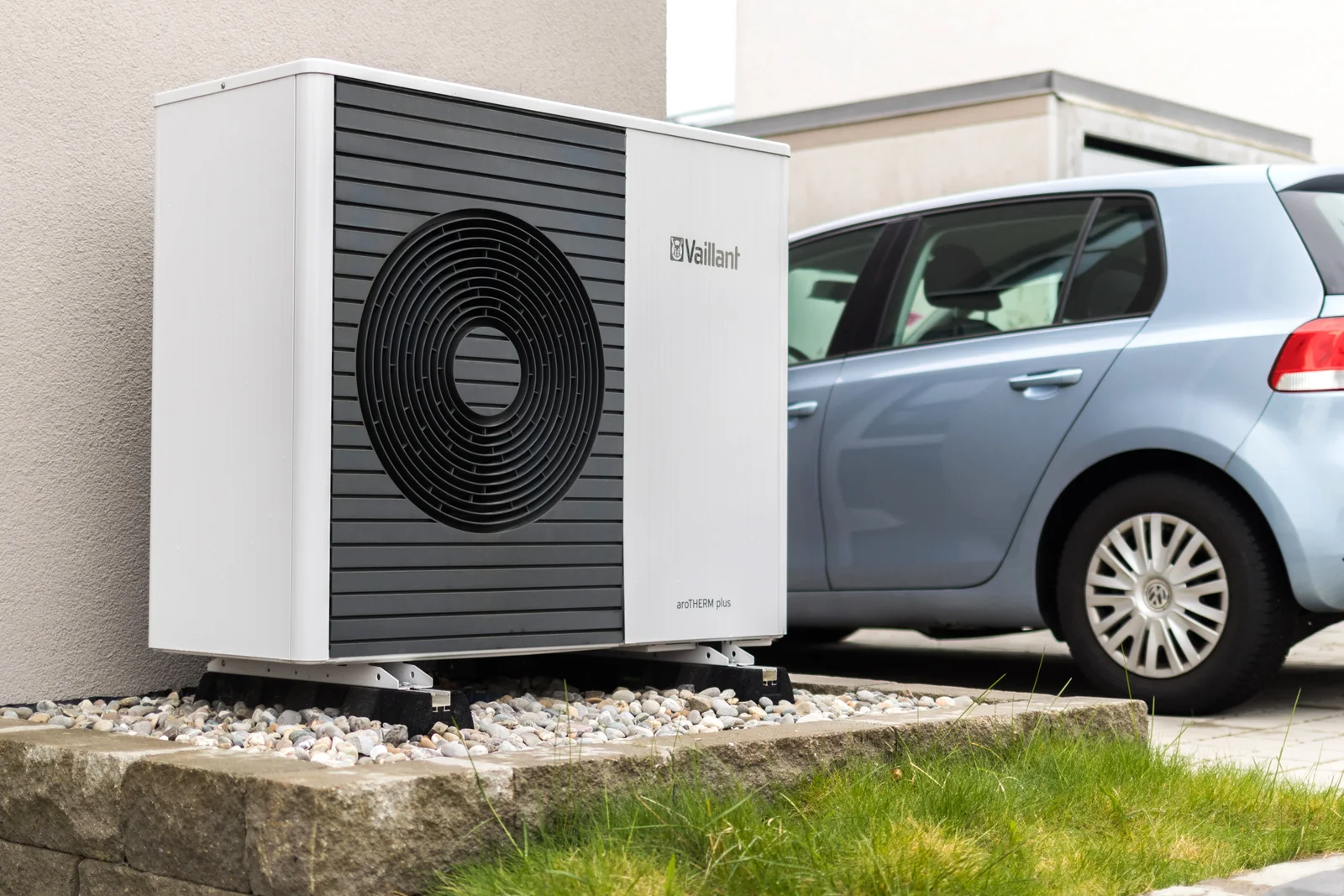
We model heat pump demand alongside the rest of the property so sizing, comfort, and operating costs can be judged against the full system rather than in isolation.
Energy modelling
Case study: how much will PV reduce a heat pump electricity bill?
Energy systems
Heating
We model heat pump demand alongside the rest of the property so sizing, comfort, and operating costs can be judged against the full system rather than in isolation.
Generation
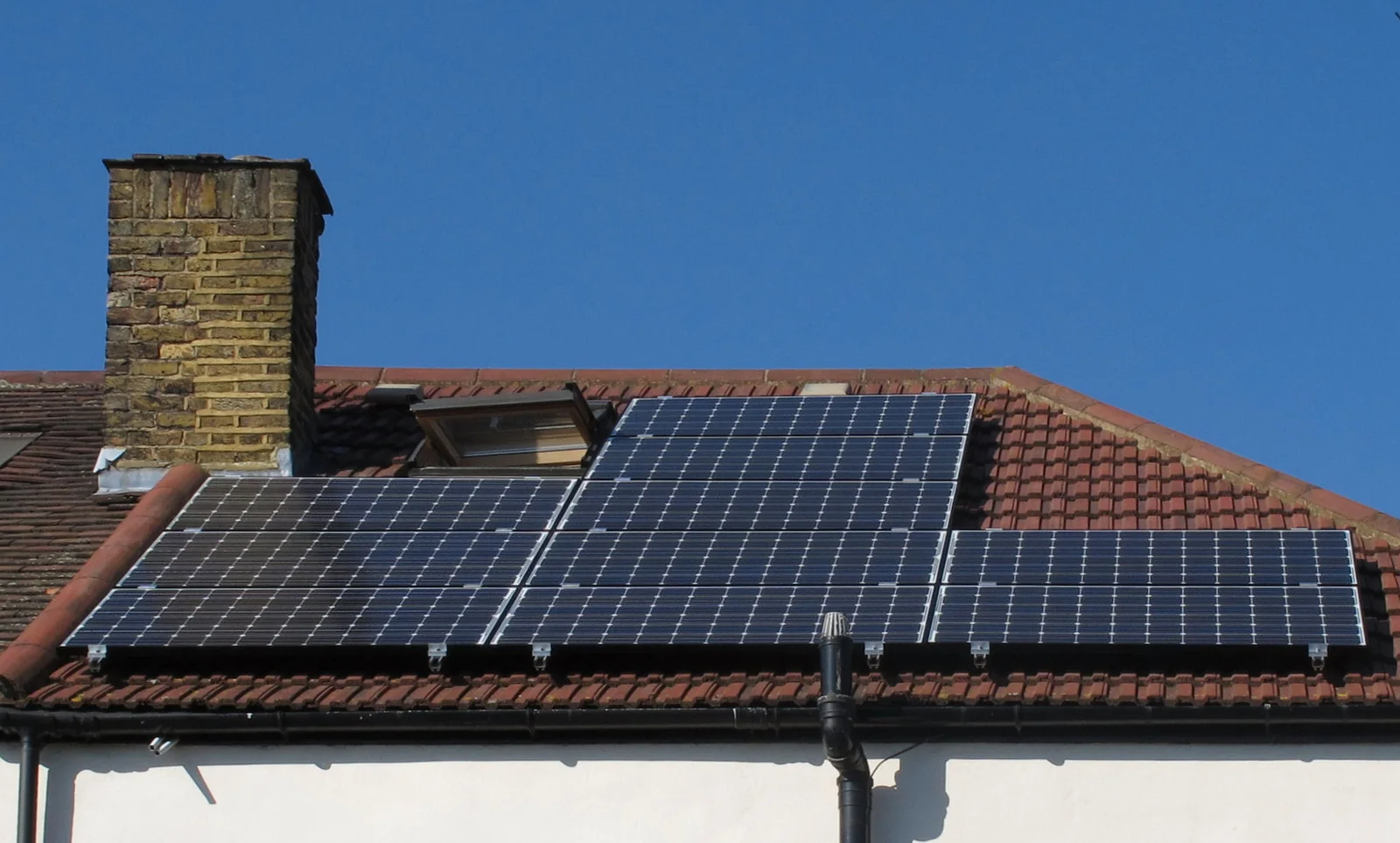
Solar generation is assessed against your usage profile, export behaviour, and future upgrades so panel decisions are based on expected performance, not generic assumptions.

Storage
Battery storage and inverter behaviour are modelled together to test usable storage, tariff shifting, and how the system responds when paired with solar, heating, and house load.
Charging
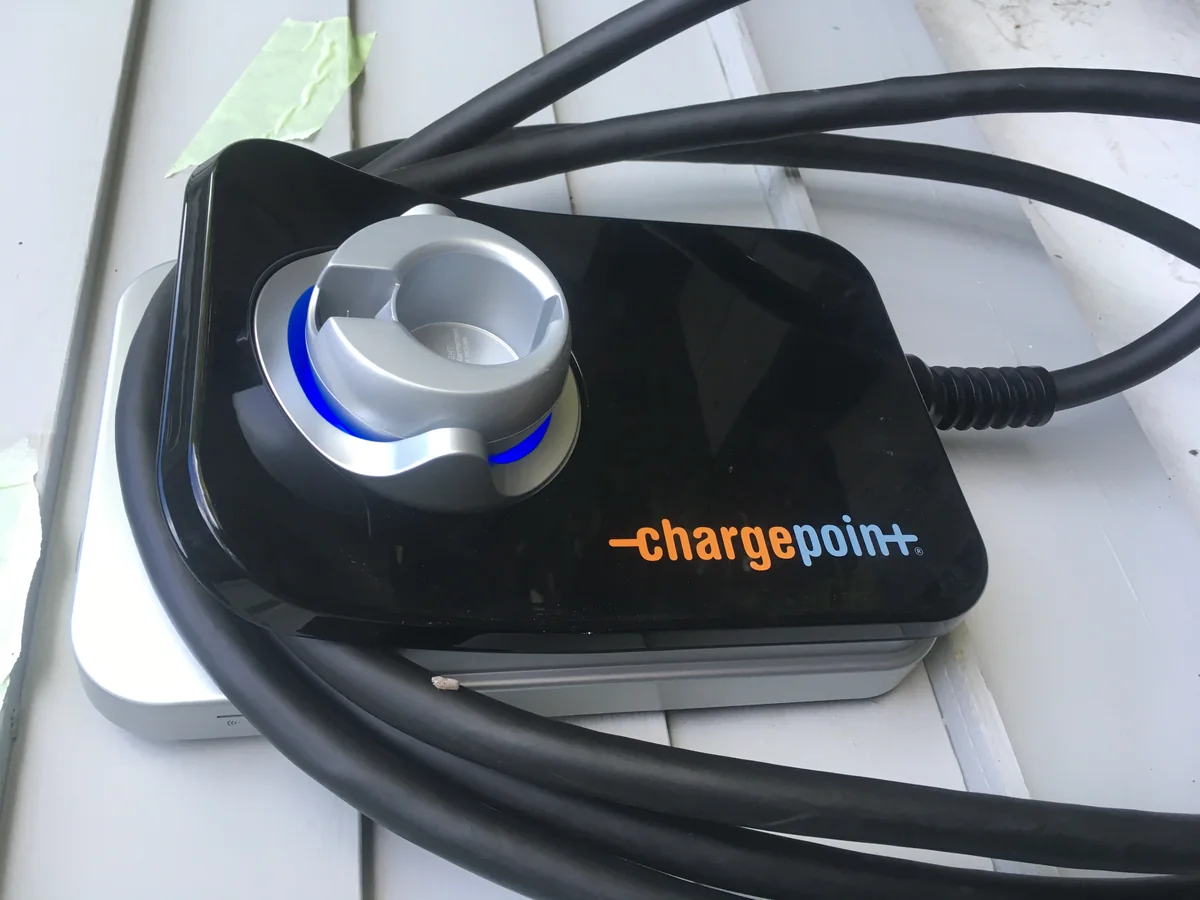
EV charging is included as part of the wider energy picture so charging habits, available capacity, and interactions with other equipment can all inform the recommendation.
Simulation report outputs
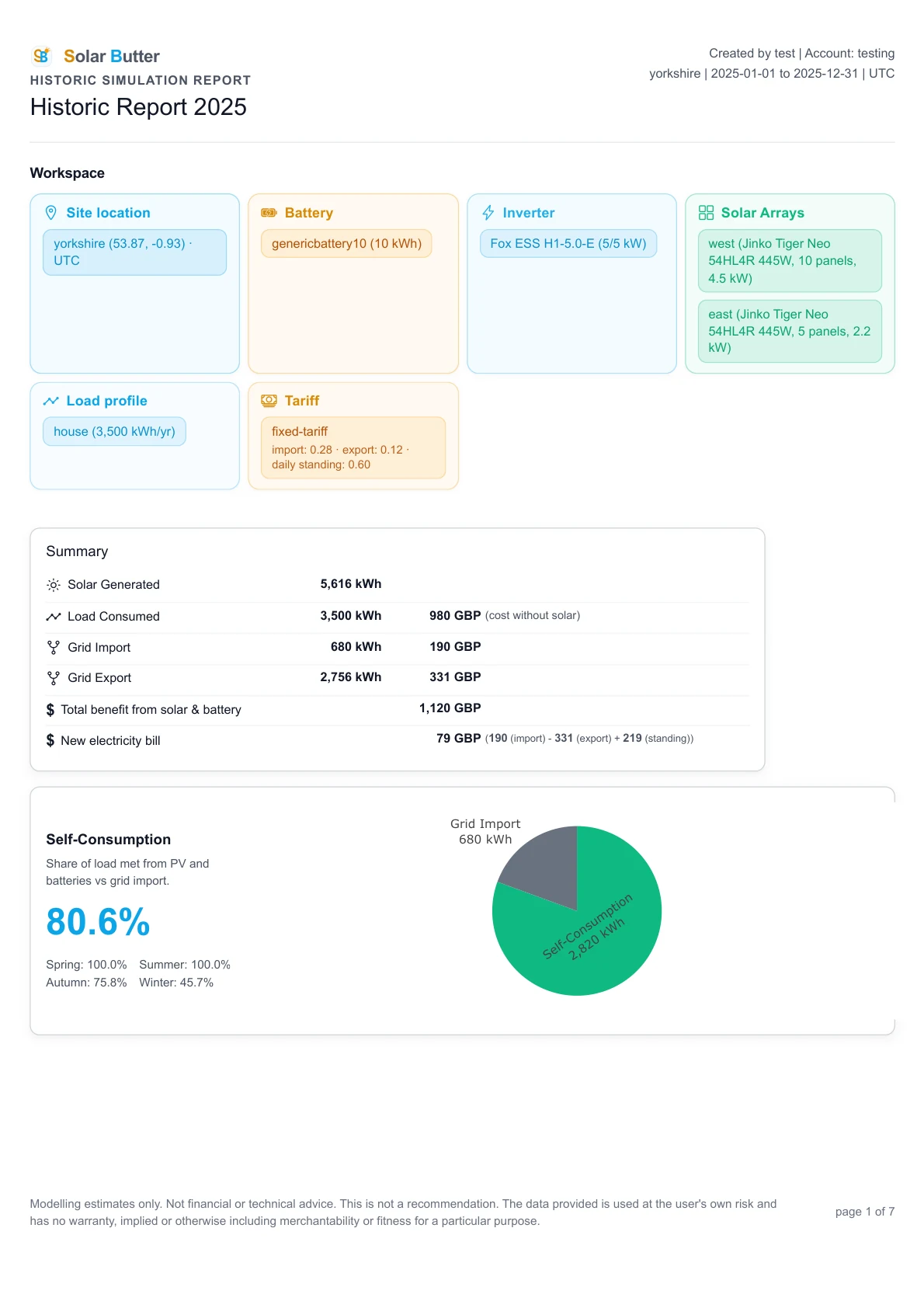
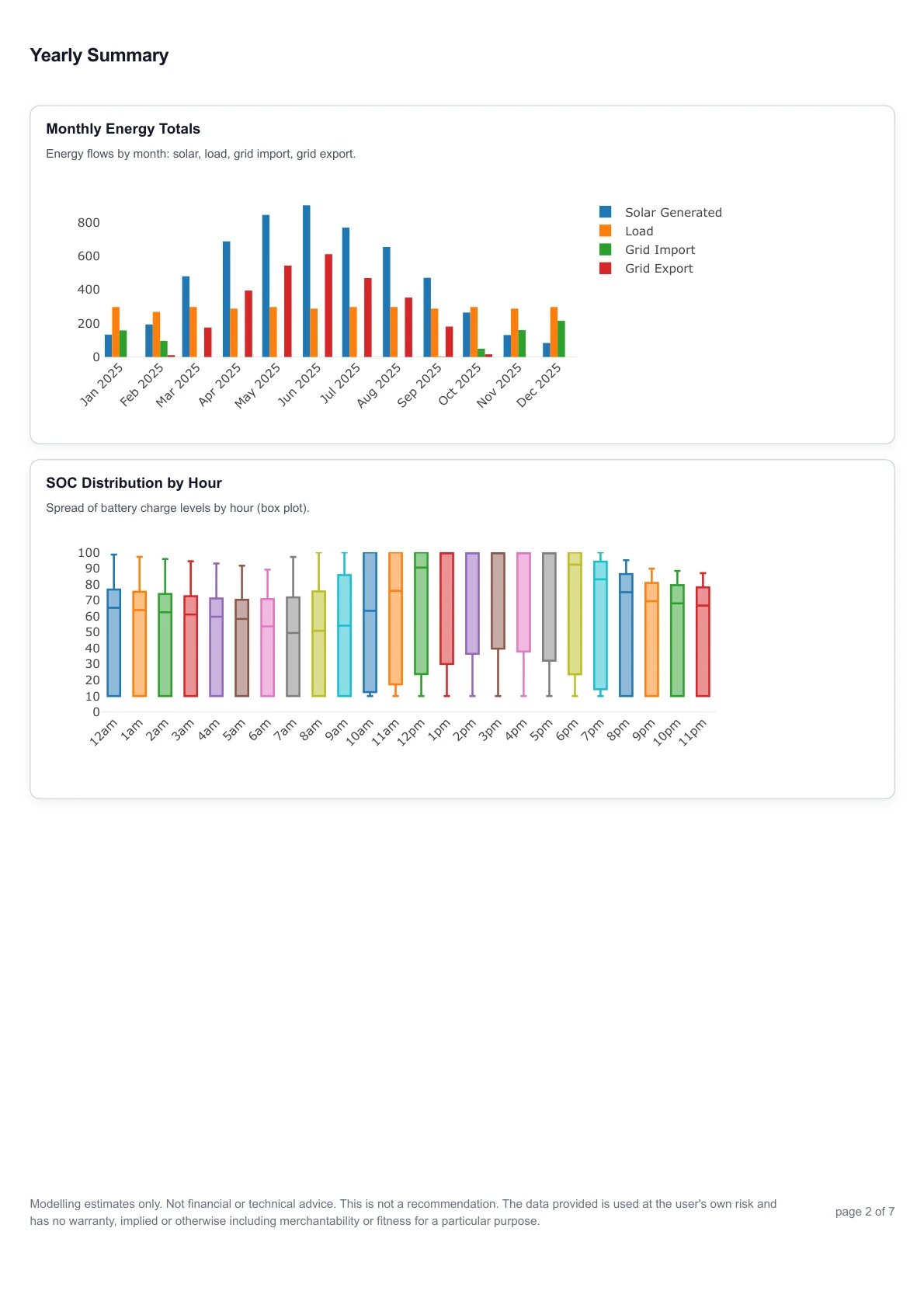
We generate bespoke reports for each system using geographically resolved, hour-by-hour weather data for a full calendar year based on your input data.
We take variables such as sunshine, temperature, wind speed and other factors and combine them with your household load profiles to give realistic predictions and savings estimates.
Optimise your system by changing variables such as battery size, number of solar panels and import/export tariff. Optionally set charge and discharge commands at specific hours for extra arbitrage revenue, and see how these setpoints change your energy savings.
Because actual weather data is used, reports can vary slightly depending on the year chosen.
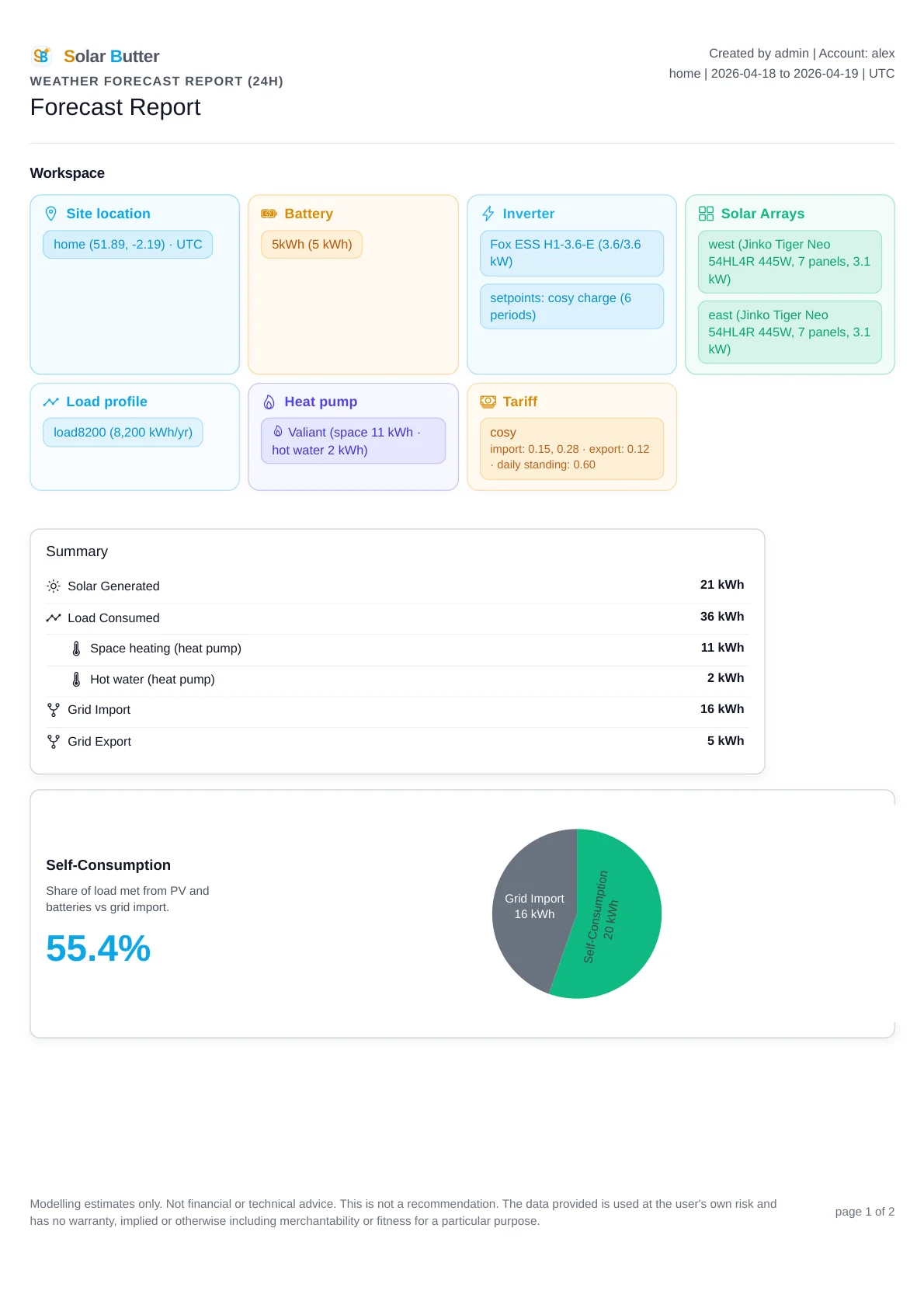
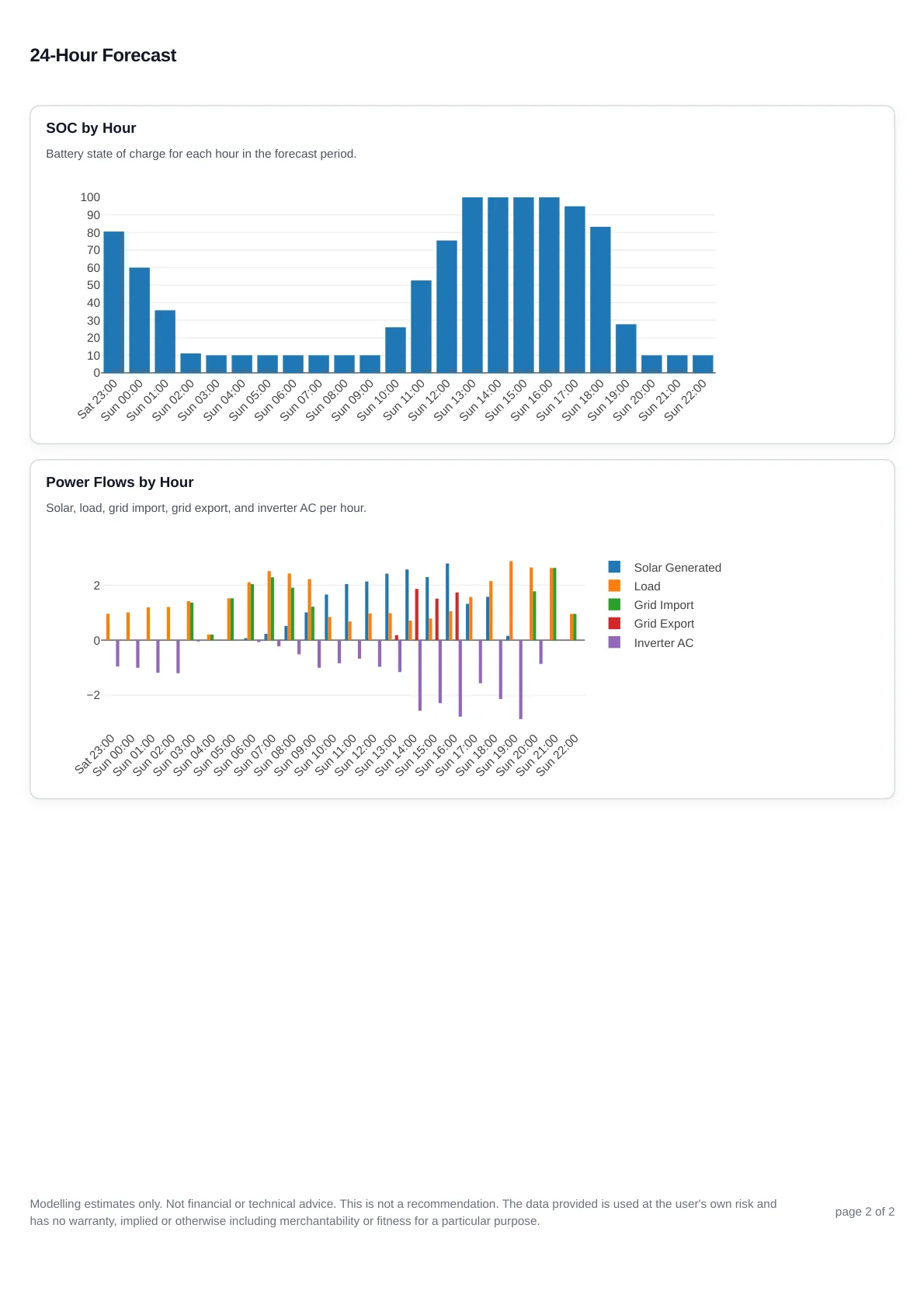
Forecast battery SOC and solar generation in the next 24 hours. This helps answer practical questions such as whether overnight grid charging is worthwhile for your batteries, given your tariffs, weather, and usage patterns.
The accuracy of the reports relies on weather forecast data, so it depends on the forecast also being accurate.
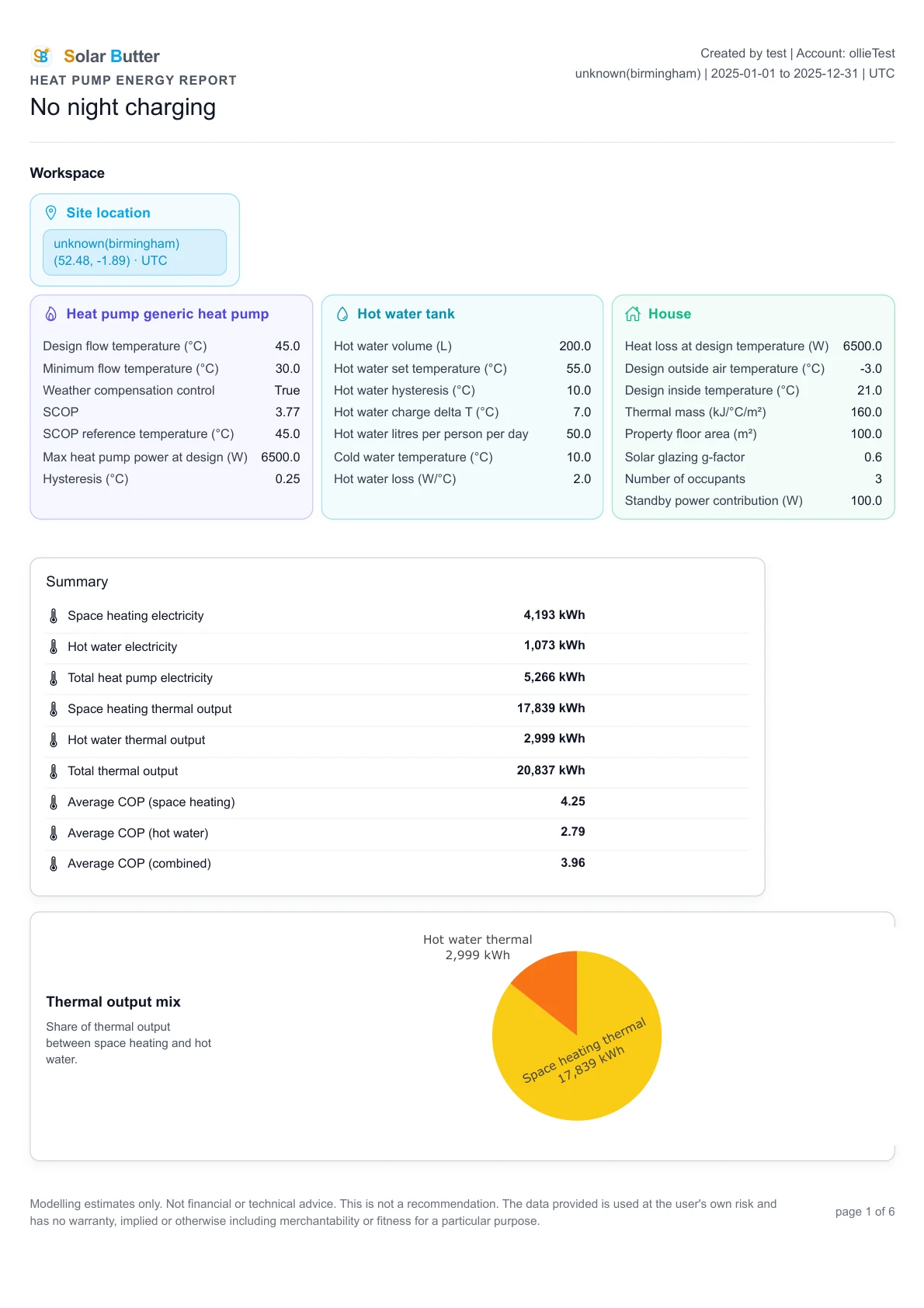
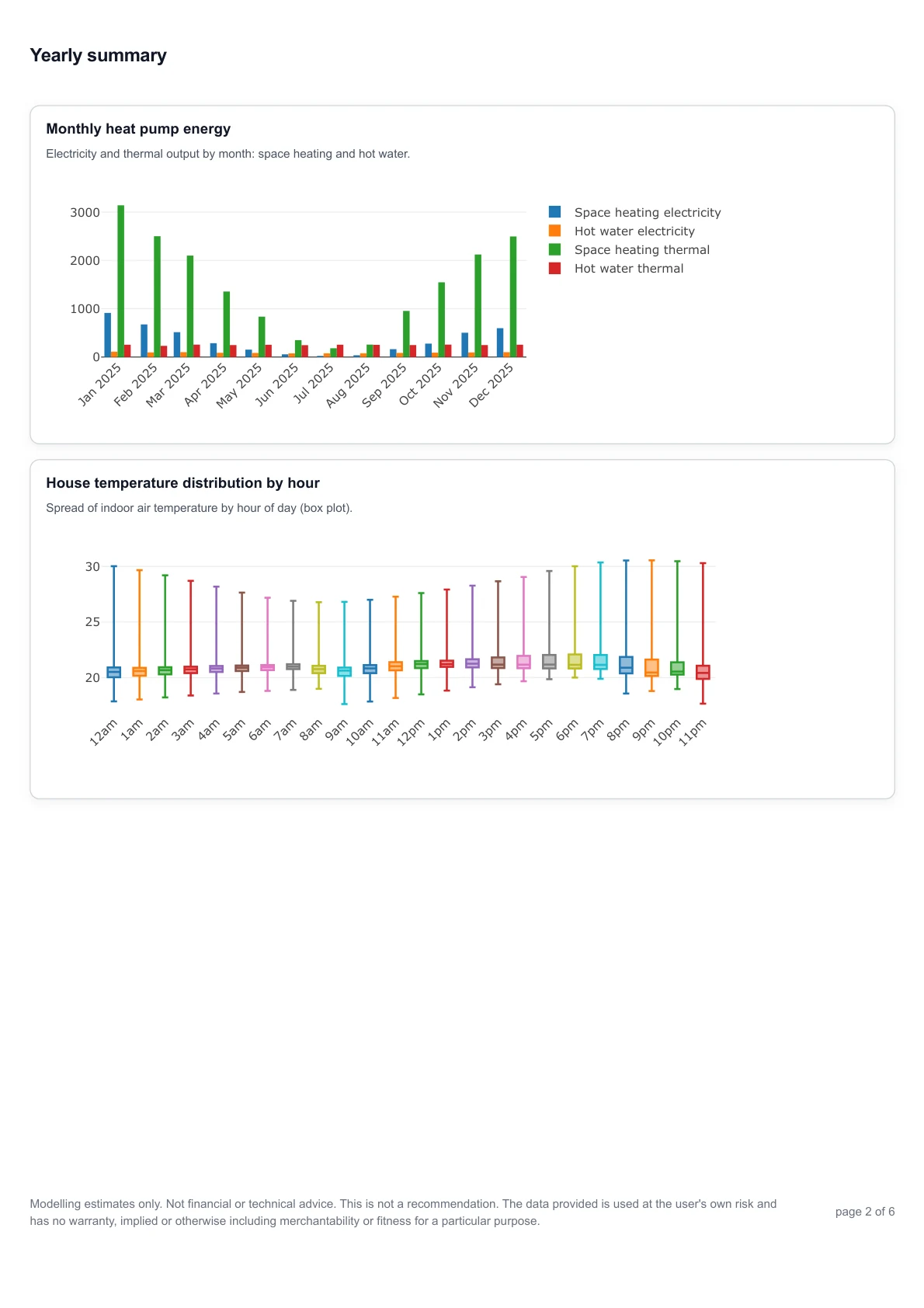
Generate historic reports of heat pump performance based on your specific input parameters such as property type and heat loss, occupancy and hot water usage. These parameters are combined with hour-by-hour weather temperature data and heat pump specific inputs such as SCOP to give realistic energy consumption for each season.