Introduction
If a 16-panel solar and battery quote already looks good, it is natural to ask whether squeezing in 4 more panels is worth doing at the same time. The key question is whether the extra 4 panels add enough financial benefit to be worth the extra cost.
In this case, the quoted 16-panel system already covers the majority of the 4,000 kWh/year load. The results suggest the extra 4 panels do improve the numbers, but most of the improvement comes from higher export rather than improving self-consumption.
These reports were modelled using our solar calculator: open the free Solar Butter solar calculator, which is free to use with no sign up required.
Baseline Model
Inputs
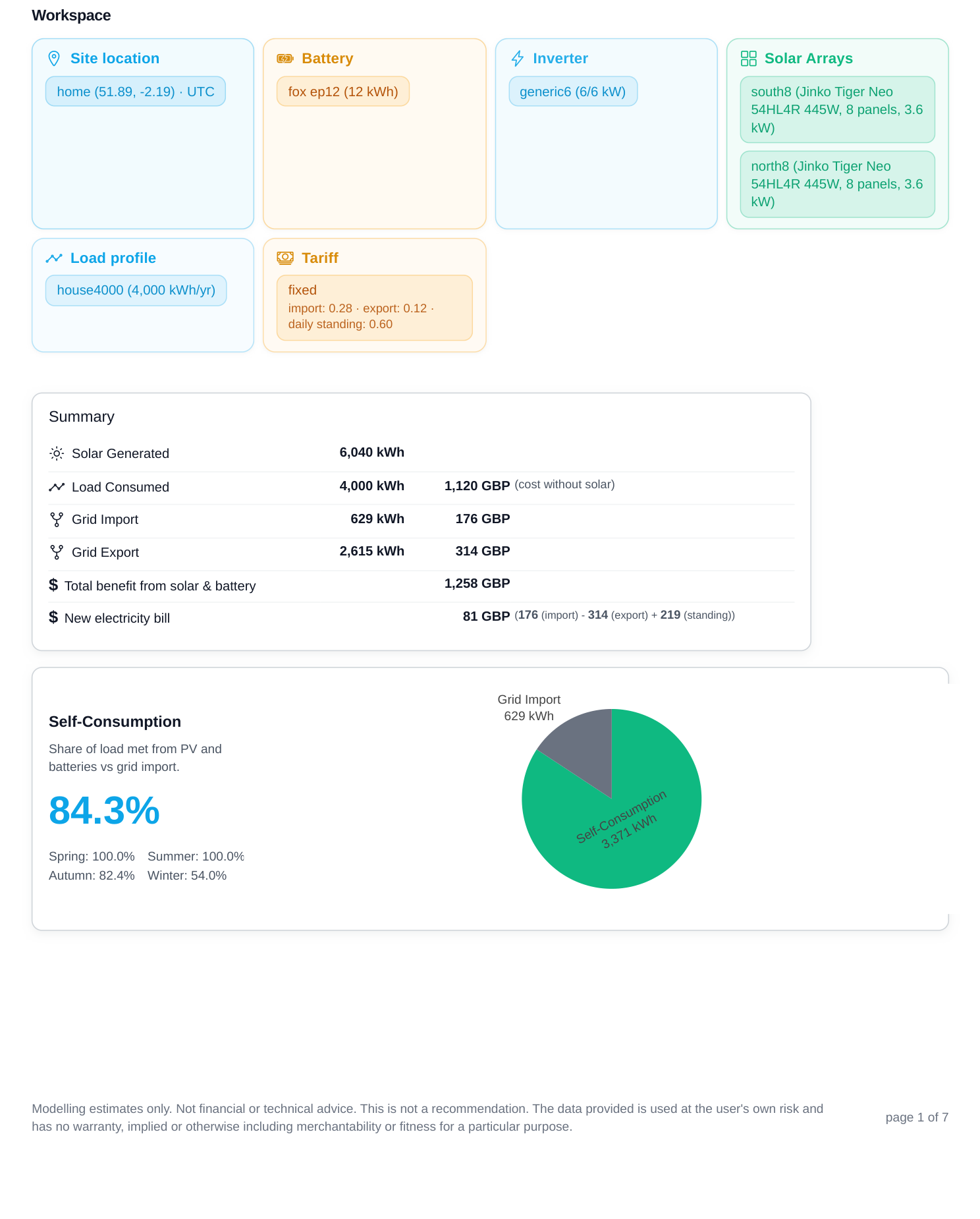
- 16 Jinko Tiger Neo 445 W panels split 8 south and 8 north
- Total array size of about 7.1 kW
- Fox EP12 12 kWh battery and 6 kW inverter
- 4,000 kWh/year household demand
- Fixed tariff: 28p import, 12p export, 60p/day standing charge
- Quoted installed price just under £10k
Outputs
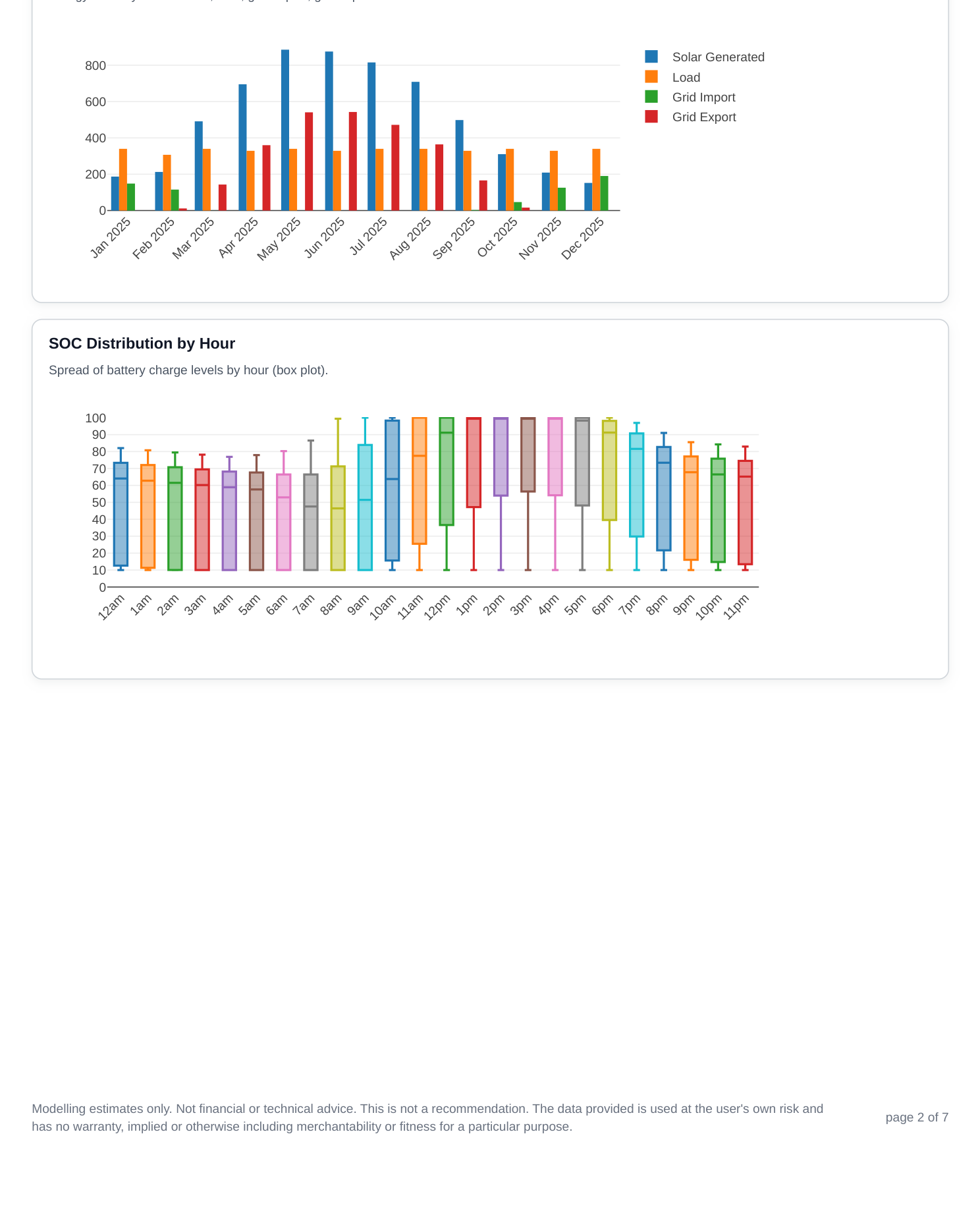
- 6,040 kWh annual solar generation
- 629 kWh grid import
- 2,615 kWh grid export
- 84.3% self-consumption of annual load
- About £1,258/year total benefit from solar and battery
- Modelled electricity bill of about £81/year
Optimisation Model
Inputs
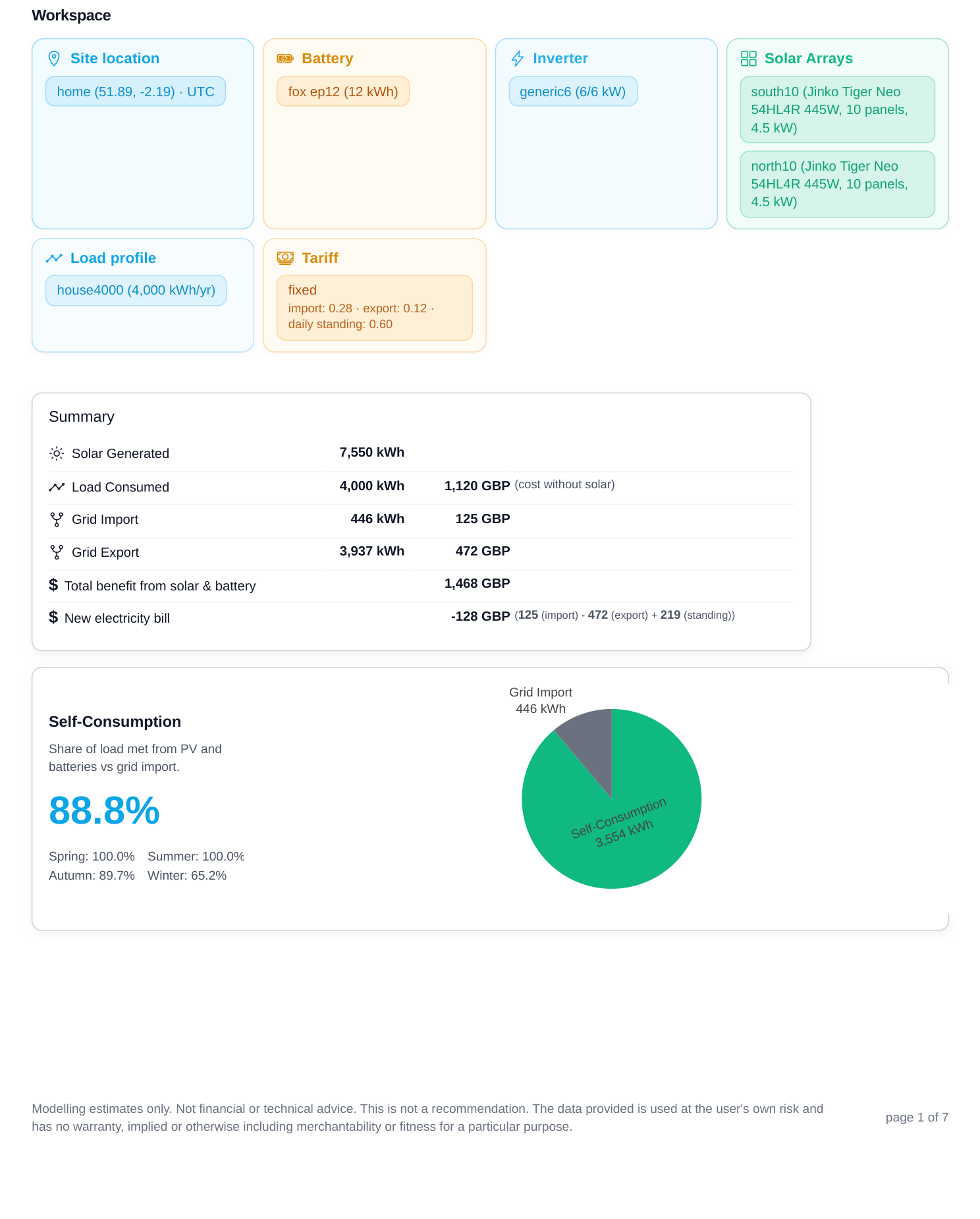
- 20 Jinko Tiger Neo 445 W panels split 10 south and 10 north
- Total array size of about 8.9 kW
- Keep the same 12 kWh battery and 6 kW inverter
- Same 4,000 kWh/year household demand and fixed tariff
- Same roof, installer, and overall system assumptions apart from the extra 4 panels
Outputs
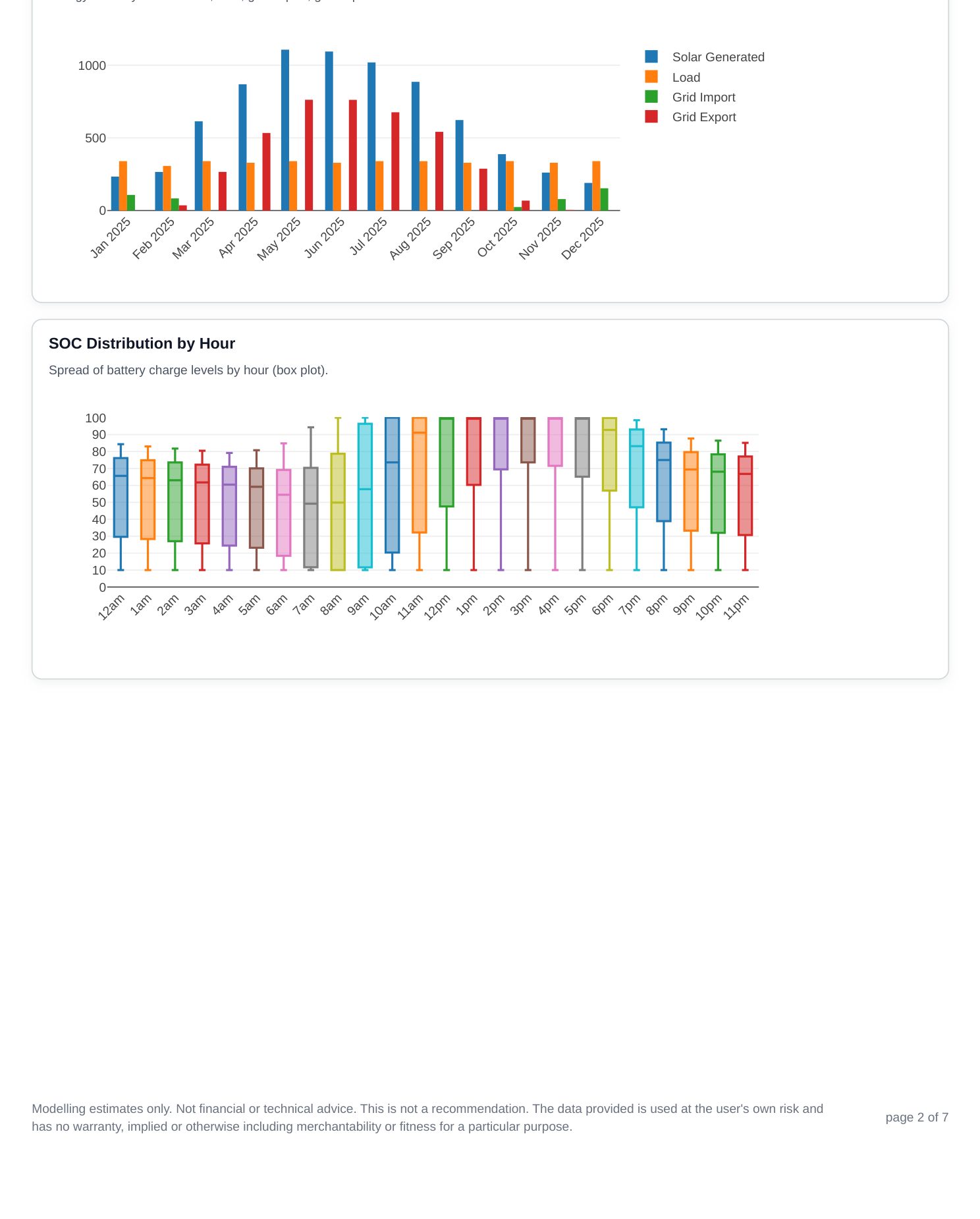
- 7,550 kWh annual solar generation
- 446 kWh grid import
- 3,937 kWh grid export
- 88.8% self-consumption of annual load
- About £1,468/year total benefit from solar and battery
- Modelled electricity bill of about -£128/year
Comparison
£1,258/year benefit
6,040 kWh generated, 629 kWh imported, 2,615 kWh exported.
£1,468/year benefit
7,550 kWh generated, 446 kWh imported, 3,937 kWh exported.
About £210/year more
That uplift comes from 1,510 kWh more generation, with most of it ending up as export.
The key point is that the 16-panel system is already doing most of the heavy lifting. Moving from 16 to 20 panels only trims grid import by 183 kWh/year, but it increases export by 1,322 kWh/year.
In other words, the extra 4 panels are not transforming the household side of the economics. They are mostly an export play, so the case depends much more on how durable that export rate proves to be over time.
Install?
The extra 4 panels look worthwhile only if they are a sensible add-on rather than a big increase in price. The modelled gain is about £210/year, so around £1,000 extra looks potentially worthwhile, above £2,000 would be hard to justify on economics alone.