Introduction
For a low-usage home with a clear south-facing roof, solar can go a long way. But enough to cover winter? This will be explored in this home with 2800 kWh/year annual usage and ~3.6 kW solar array.
Whilst annual generation can exceed annual household usage, that does not mean the home becomes fully self-sufficient through winter. As the results show, only around 50% of winter usage is covered in this example.
These reports were modelled using our solar calculator: open the free Solar Butter solar calculator, which is free to use with no sign up required.
Baseline Model
Inputs
- South-facing house with annual electricity usage of about 2,800 kWh
- Beginner planning context, looking at long-term solar economics
- Fixed tariff assumption: 28p import, 12p export, 60p/day standing charge
Outputs
- Estimated electricity bill without solar: about £784/year + £219/year standing charge
Optimisation Model
Inputs
- 8 Jinko Tiger Neo 54HL4R 445 W panels on the south-facing roof
- Total solar array size of about 3.6 kW
- Fox ESS H1-3.6-E inverter
- 5 kWh battery
- Same 2,800 kWh/year household demand and fixed tariff assumptions
Outputs
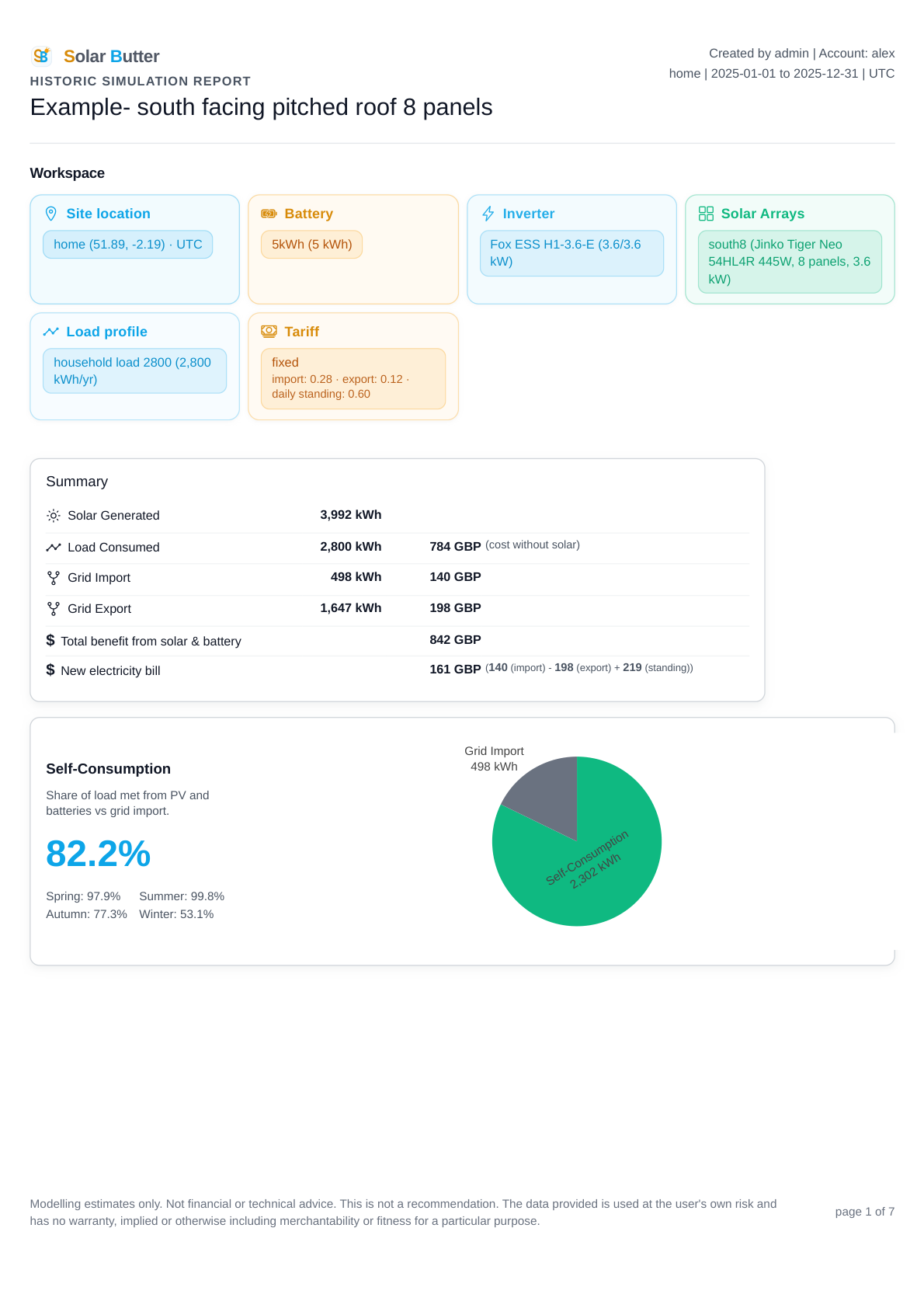
- 3,992 kWh annual solar generation
- 498 kWh grid import
- 1,647 kWh grid export
- 82.2% of annual load met from PV and battery
- 53.1% of winter load met from PV and battery
- About £842/year total benefit from solar and battery
- Modelled electricity bill of about £161/year
Comparison
£1003/year bill
A simple reference point for a 2,800 kWh/year home buying all of its electricity.
£161/year bill
3,992 kWh generated, 498 kWh imported, 1,647 kWh exported.
53.1% winter coverage
The system does not fully supply the house in winter, even though annual generation is higher than annual usage.
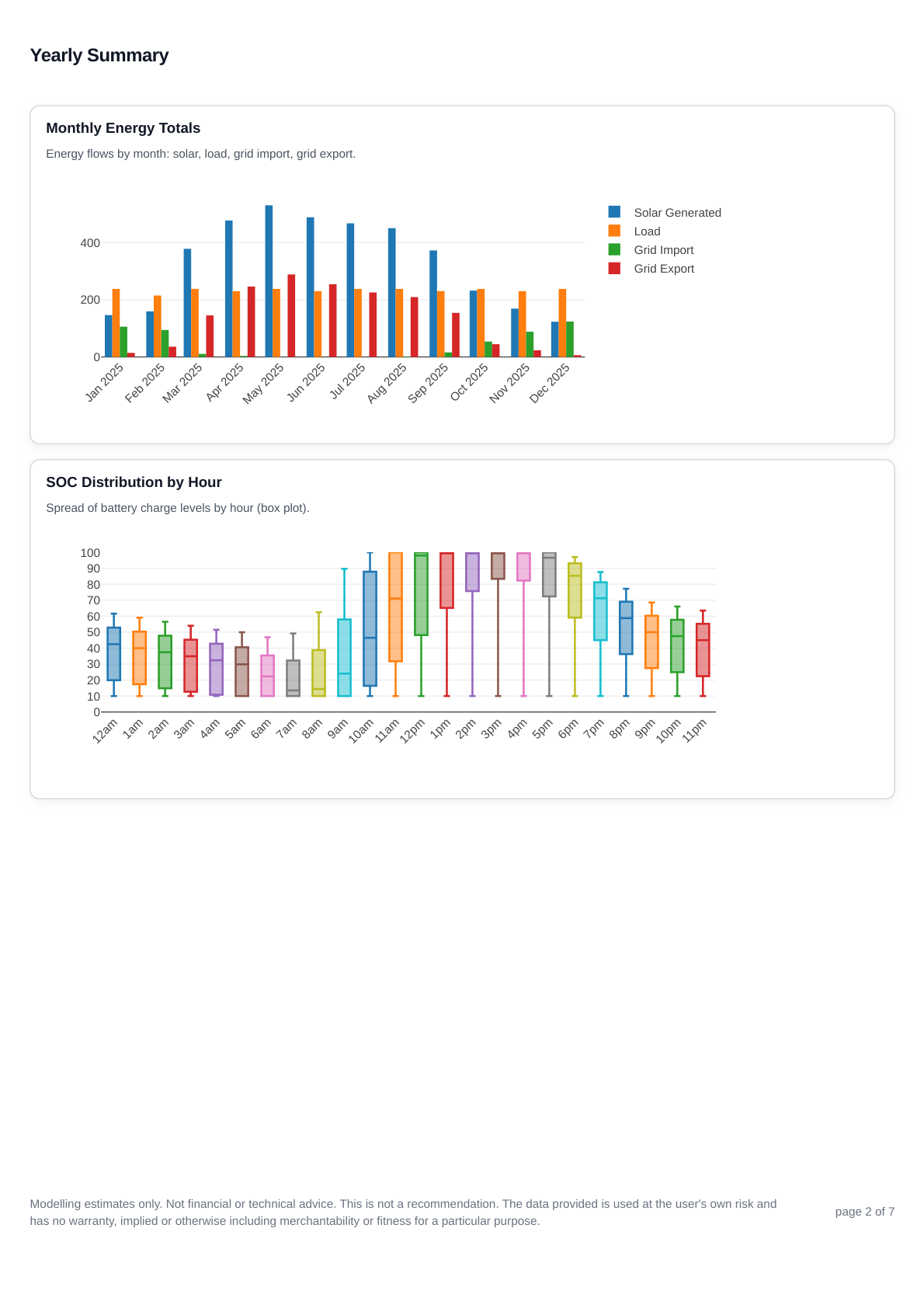
The important distinction is annual energy versus winter self-sufficiency. This roof generates more electricity over the year than the household uses, but the timings do not line up, so the model still imports 498 kWh from the grid.
The results show that whilst the solar array produces far more electricity in total over the year, there will still be import during winter. The good news is that the economics still look strong: the bill falls by about £623/year, and exports increases the total modelled benefit to about £842/year.
Install?
For a low-usage home with a clear south-facing roof, this looks like a sensible solar prospect. The annual bill becomes much smaller, and the system is productive enough to export a useful surplus through the brighter months.
Whether it is worth doing now comes down to quote price. Using the modelled £842/year total benefit, a £5,000 system implies roughly a 6-year payback, £7,000 is about 8 years, and £9,000 is about 11 years. If you judge it only on the £623/year bill reduction, payback is slower, so comparing installer quotes carefully matters.