Introduction
On paper, a UK solar export limit of 3.68 kW with a matching inverter can sound like a serious handicap on an 8 kW south-facing array. In this model, though, the annual cash impact is noticeable but still not dominant for ROI. We compare the same 8 kW array, Fox EP12 12 kWh battery, fixed tariff, and 5,500 kWh/year household demand with two inverter choices: a 3.68 kW export-limited inverter and an 8 kW inverter with no export cap in the model.
On a typical UK single-phase home, that 3.68 kW figure is often discussed alongside G98 (notify-after-install) connections and DNO export applications. It is also an inverter-sizing choice: a smaller AC export limit can clip peak generation even when the DC array is larger.
The smaller inverter does two things at once: it caps how much can be exported at the connection limit, and it also shows inverter-side clipping in the report (881 kWh/year in this run), so total solar generated from the panels is lower than the 8 kW inverter case. Even so, a lot of value still comes from on-site use and the battery, which is why the gap in total annual benefit stays in the same ballpark as a modest export-income change rather than a wholesale rewrite of the economics.
These reports were modelled using our solar calculator: open the free Solar Butter solar calculator, which is free to use with no sign up required.
Assumptions
- 18 Jinko Tiger Neo 54HL4R 445 W panels on a south-facing roof, about 8.0 kW total
- Fox EP12 battery, about 12 kWh storage
- 5,500 kWh/year household electricity demand
- Fixed tariff: 28p import, 12p export, 60p/day standing charge
- The two reports use the same roof, battery, tariff, demand, and weather-year assumptions
- The only intended change between the two scenarios is inverter model: a 3.68 kW export-limited inverter versus an 8 kW inverter
In this case study, "solar generated" means the total energy received by the solar panels from the sun, rather than the smaller share later utilised directly by the inverter.
The simulation uses hour-by-hour averaged weather data rather than real-life second-by-second conditions, so actual performance may differ slightly from the model on individual days, but it should still give a reasonable annual estimate.
Scenario 1: 3.68 kW inverter (export limited)
Outputs
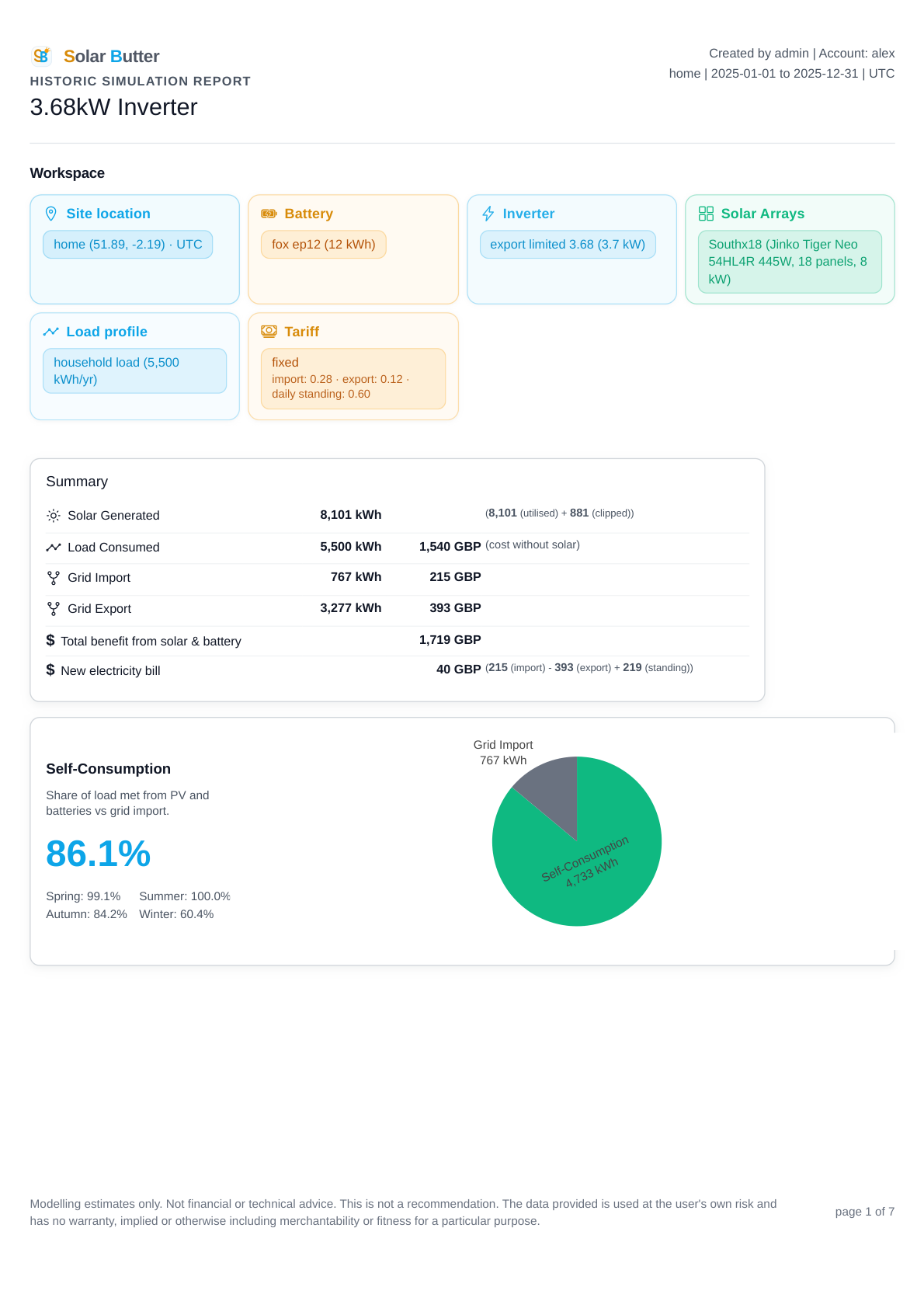
- 8,101 kWh annual solar generation (8,101 kWh utilised plus 881 kWh clipped)
- 767 kWh grid import
- 3,277 kWh grid export
- 4,733 kWh self-consumed from PV and battery
- 86.1% of annual load met by PV and battery
- About £1,719/year total benefit from solar and battery
- Modelled electricity bill of about £40/year
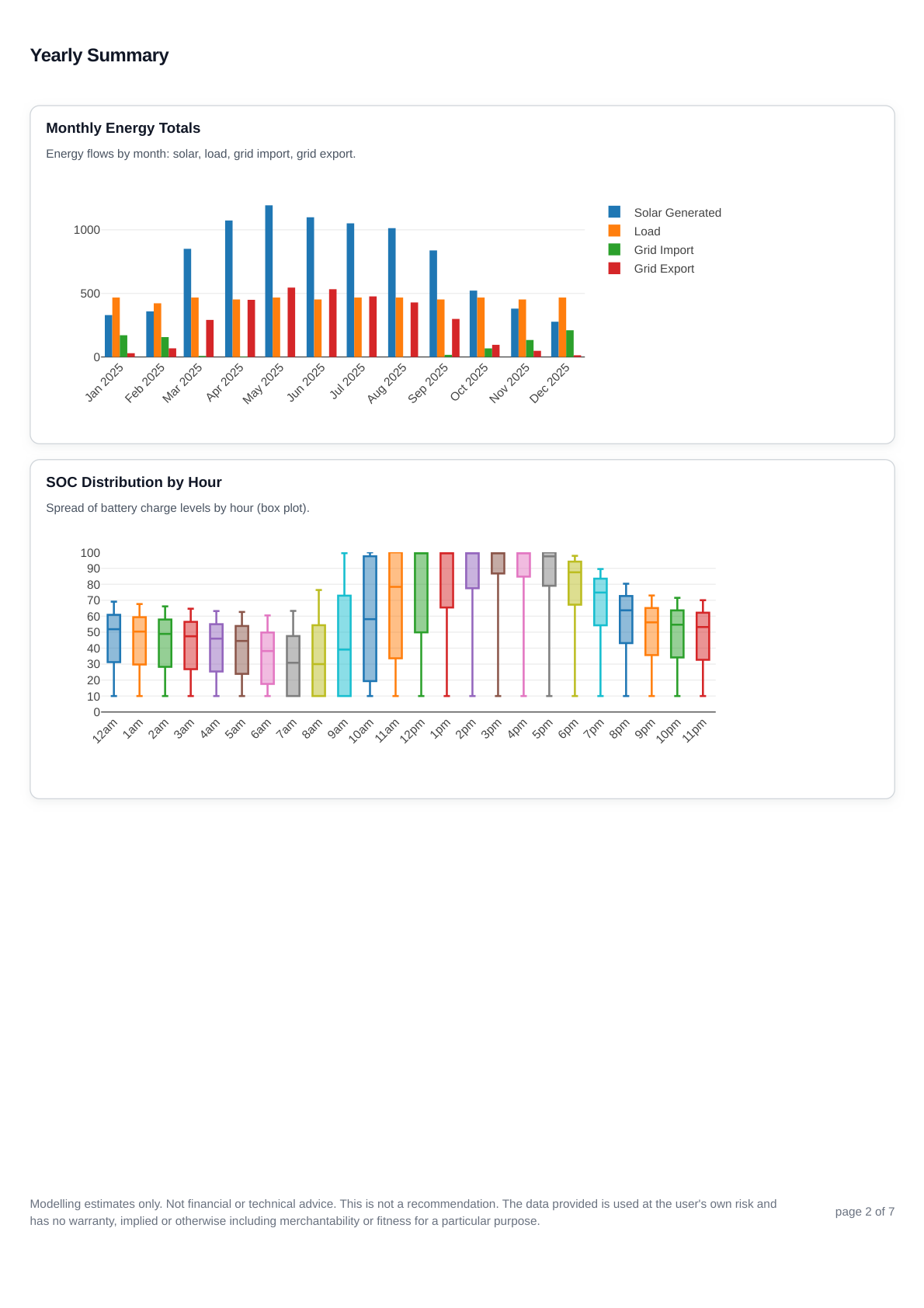
Even with the smaller inverter, the result is still strong because the household uses a meaningful amount of electricity and the battery captures a lot of solar before export and clipping dominate in the brightest hours.
Scenario 2: 8 kW inverter
Outputs
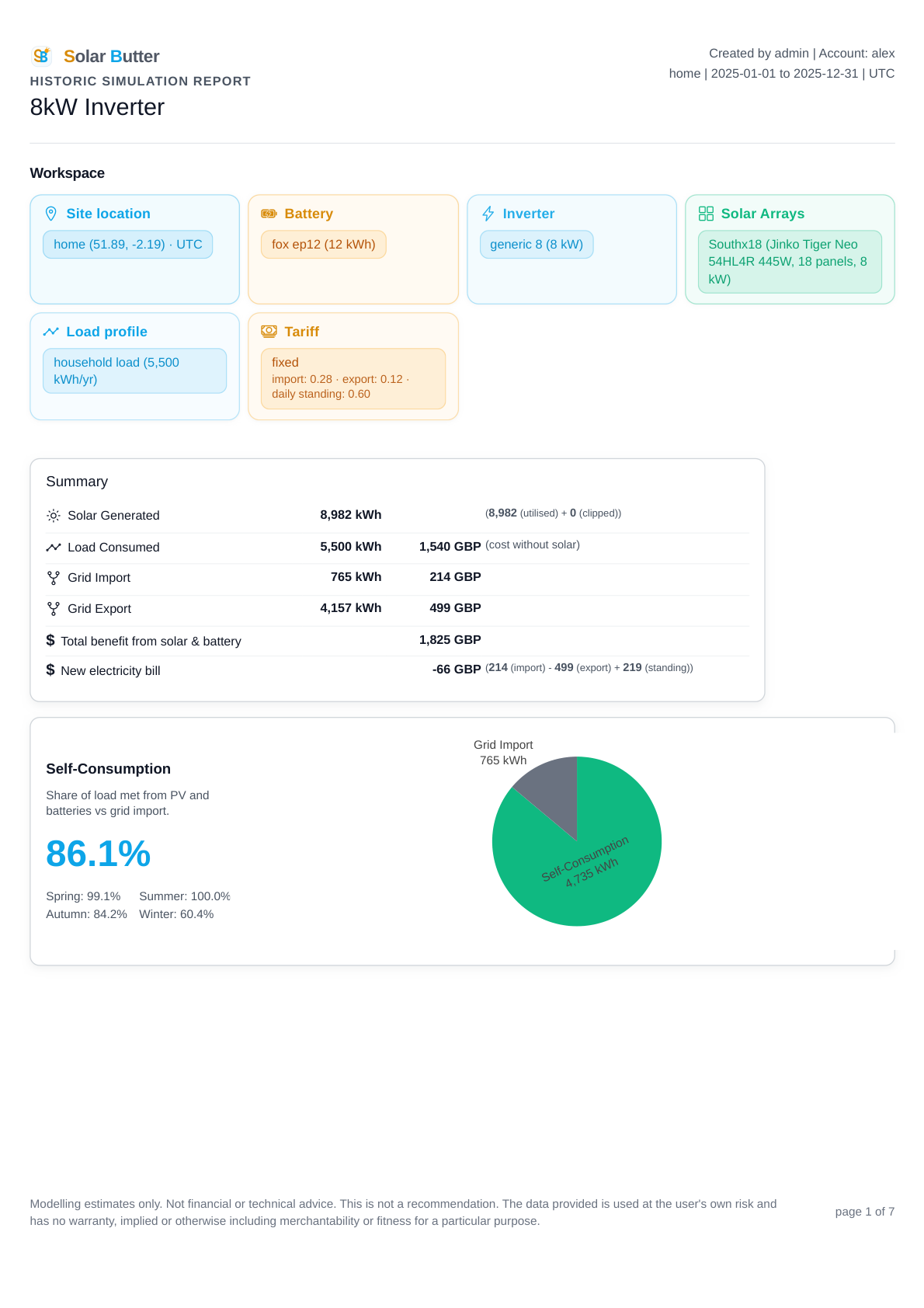
- 8,982 kWh annual solar generation (no clipping in the model summary)
- 765 kWh grid import
- 4,157 kWh grid export
- 4,735 kWh self-consumed from PV and battery
- 86.1% of annual load met by PV and battery
- About £1,825/year total benefit from solar and battery
- Modelled electricity bill of about -£66/year
£1,719/year benefit
8,101 kWh generated, 767 kWh imported, 3,277 kWh exported.
£1,825/year benefit
8,982 kWh generated, 765 kWh imported, 4,157 kWh exported.
About £106/year
The 3.68 kW inverter trims grid export by about 880 kWh/year, roughly 21% versus the 8 kW inverter case.
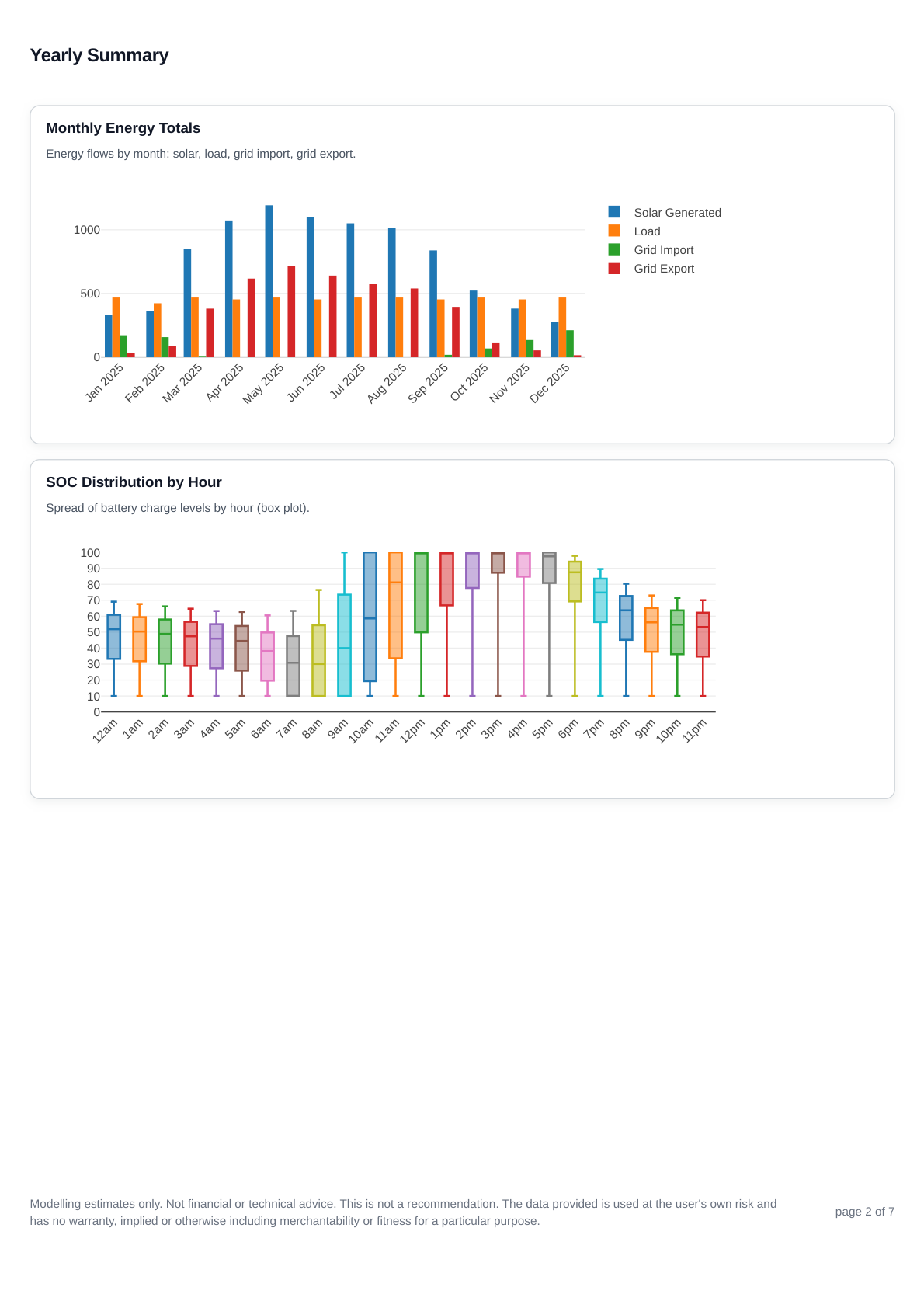
In this comparison, most of the lost energy is summer export and clipped production on the brightest hours, rather than a change in how the house is powered across the whole year.
That is consistent with how a south-facing array behaves. Full solar output only occurs in full sun when the sun is directly normal to the array, and that combination is rare over a full year. On top of that, a 12 kWh battery is a reasonable size for this setup, so a lot of midday solar is absorbed by the battery first before export becomes the binding limit.
| Scenario | Solar generated | Grid import | Grid export | Self-consumed solar | Export income | Total benefit | New bill |
|---|---|---|---|---|---|---|---|
| 3.68 kW inverter (export limited) | 8,101 kWh | 767 kWh | 3,277 kWh | 4,733 kWh | £393/year | £1,719/year | £40/year |
| 8 kW inverter | 8,982 kWh | 765 kWh | 4,157 kWh | 4,735 kWh | £499/year | £1,825/year | -£66/year |
Conclusion
The practical result is a moderate export-led gap. The 3.68 kW inverter reduces grid export by about 880 kWh/year and trims total annual benefit by about £106/year, or roughly 5.8% versus the 8 kW inverter case. For a household using 5,500 kWh/year, export is still useful in summer, but it is not the biggest driver of ROI. Most of the value comes from on-site use and battery support rather than from grid export.
For this exact setup, the DNO-aligned 3.68 kW inverter is not ideal versus an 8 kW unit, but it is also not wiping out the economics on its own. The 8 kW inverter model is better, yet the improvement is small enough that it would not transform ROI by itself without other changes to costs or tariffs.
The model also has limits. It uses hour-by-hour weather data rather than second-by-second cloud movement, so real clipping and export on individual sunny days may differ slightly from reality. The result should give a good baseline though, and the conclusions would be the same: this looks like a meaningful export and clipping penalty, but still not a major system problem in annual cash terms for this demand and battery size.
To explore different export limits, inverter sizes, and tariffs for your own roof and usage, run the numbers in the Solar Butter solar calculator.