Introduction
If you have a heat pump and a high electricity bill, solar can help a lot, but it will not fix everything on its own. In this example, we assume a fairly typical setup: a 100 m2 home, a Vaillant heat pump, around 6.2 kW of solar, a 12 kWh battery, and an Octopus Cosy-style tariff. The key issue is that your heat pump needs the most electricity in winter, just when solar panels produce the least. That mismatch means solar is not a silver bullet, and the biggest savings come when it is combined with battery storage and winter night charging.
These reports were modelled using our solar calculator: open the free Solar Butter solar calculator, which is free to use with no sign up required.
Baseline Model
Inputs
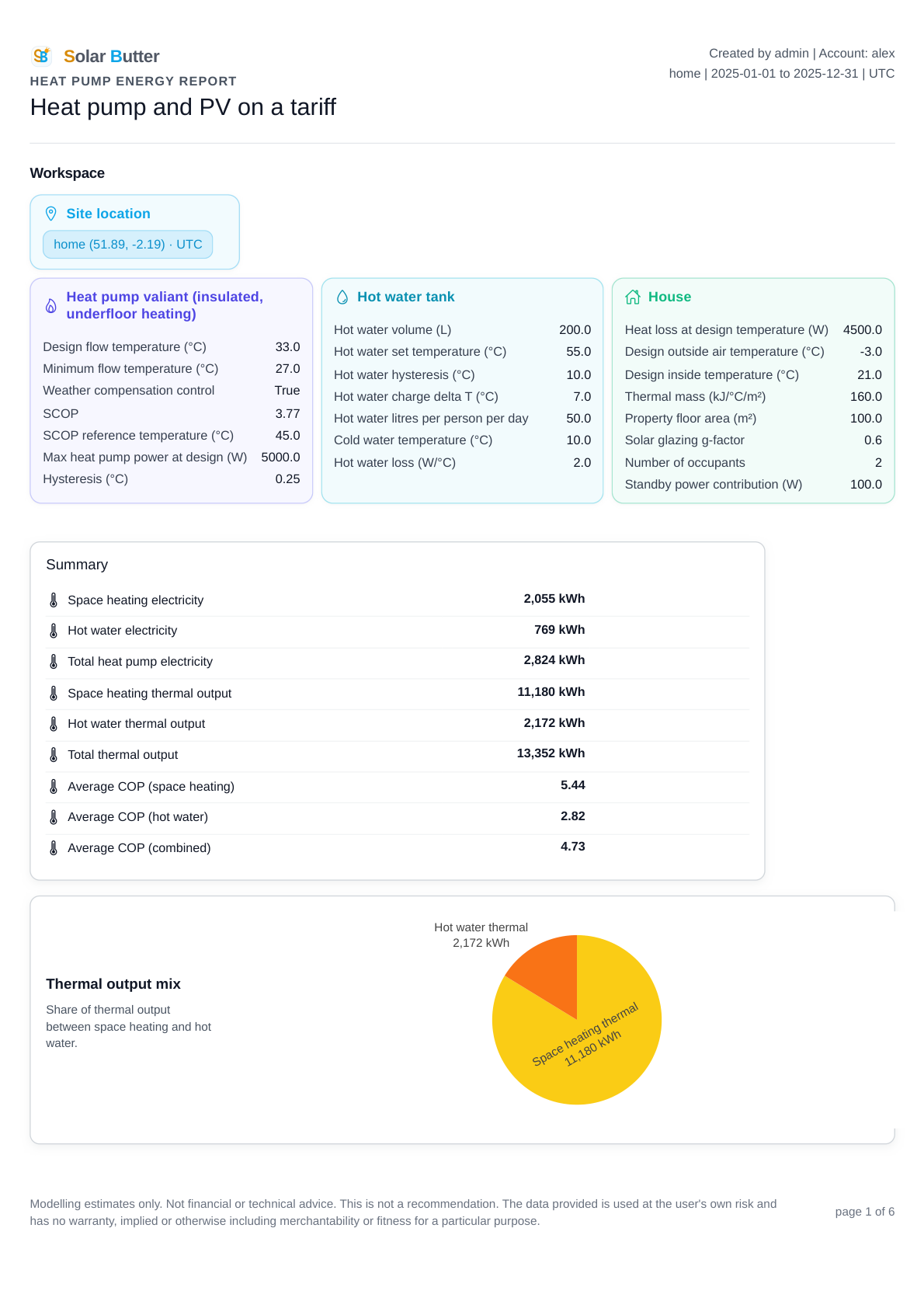
- 100 m2 home with 4.5 kW heat loss at -3C
- Vaillant heat pump with underfloor heating
- 33C design flow temperature and a 200 litre hot-water tank
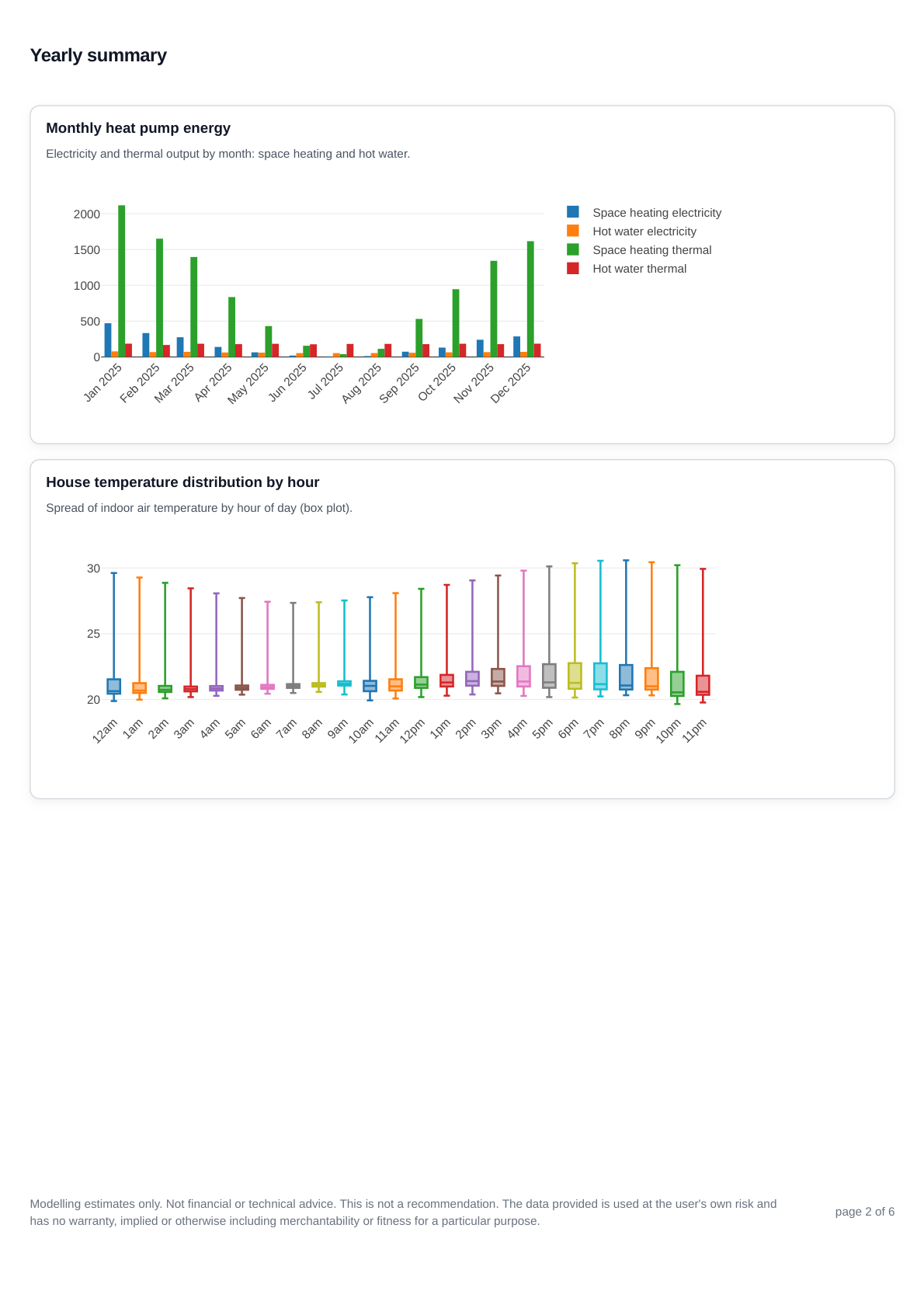
- 2,824 kWh/year heat pump electricity demand
- 3,500 kWh/year non-heat-pump household load
- Cosy tariff: 15p / 28p / 45p import, 12p export, 60p/day standing charge
Outputs
- 13,352 kWh annual thermal output
- 6,324 kWh total annual electricity demand once the 3,500 kWh house load is included
- No PV means the full 6,324 kWh would be imported from the grid
- About £1,943/year electricity spend including standing charge on the same tariff
- High winter heat demand is the core reason the bill feels expensive
Optimisation Model
Inputs
- Keep the same house, heat pump, and tariff assumptions
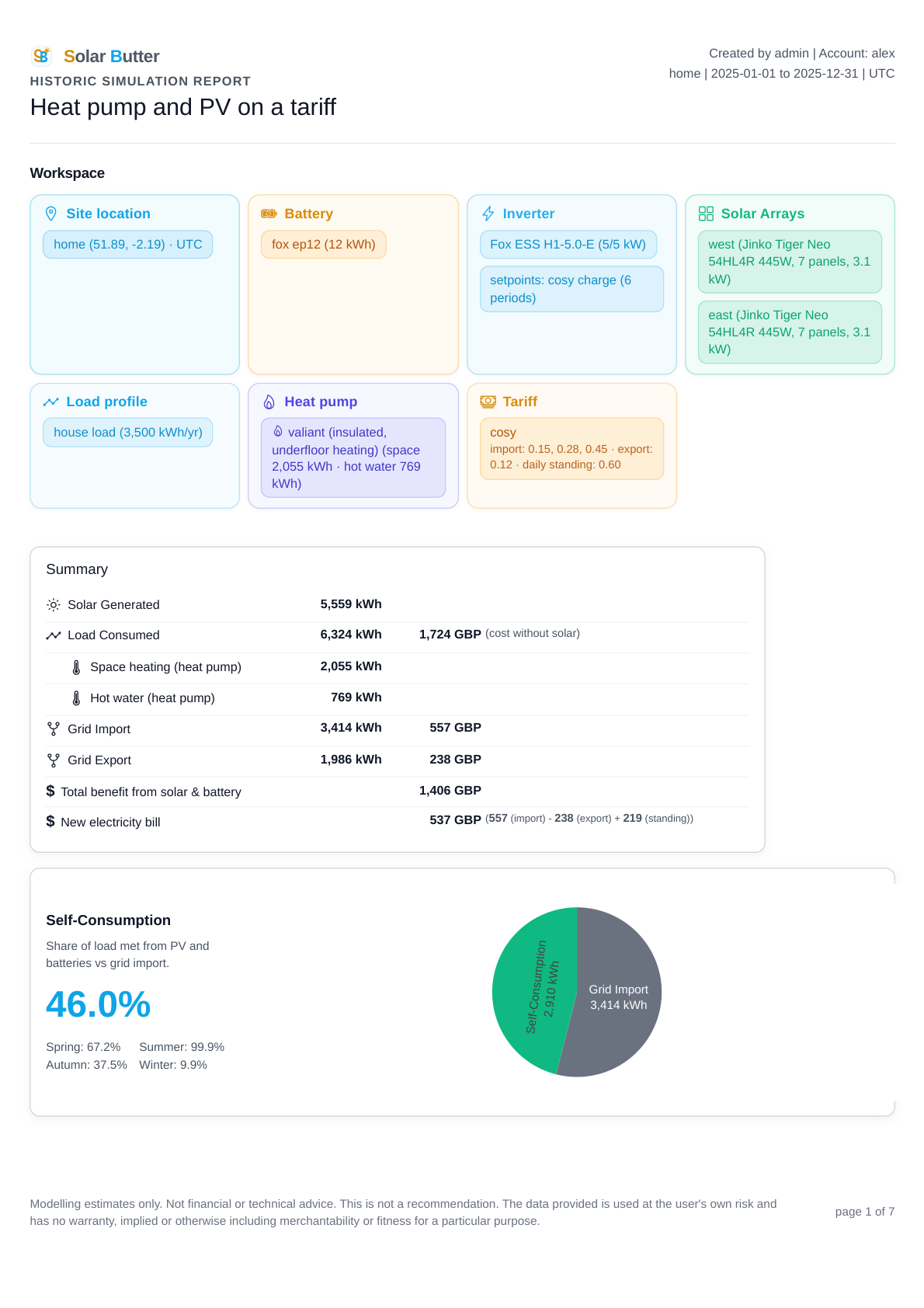
- Add 14 Jinko Tiger Neo 445 W panels split east and west
- Total solar array size of about 6.2 kW
- Add a Fox ESS H1-5.0-E 5 kW inverter and 12 kWh battery
- Run cosy charge setpoints across 6 charging periods
- Same 3,500 kWh house load and 2,824 kWh heat pump demand
Outputs
- 5,559 kWh annual solar generation
- 3,414 kWh grid import
- 1,986 kWh grid export
- 46.0% self-consumption of annual load
- About £1,406/year total benefit from solar and battery
- Modelled bill of about £537/year
Comparison
£1,943/year bill
6,324 kWh imported, with 2,824 kWh of that coming from the heat pump.
£537/year bill
5,559 kWh generated, 3,414 kWh imported, and 1,986 kWh exported.
About £1,406/year
That is roughly a 72% lower annual bill, even though winter imports are still significant.
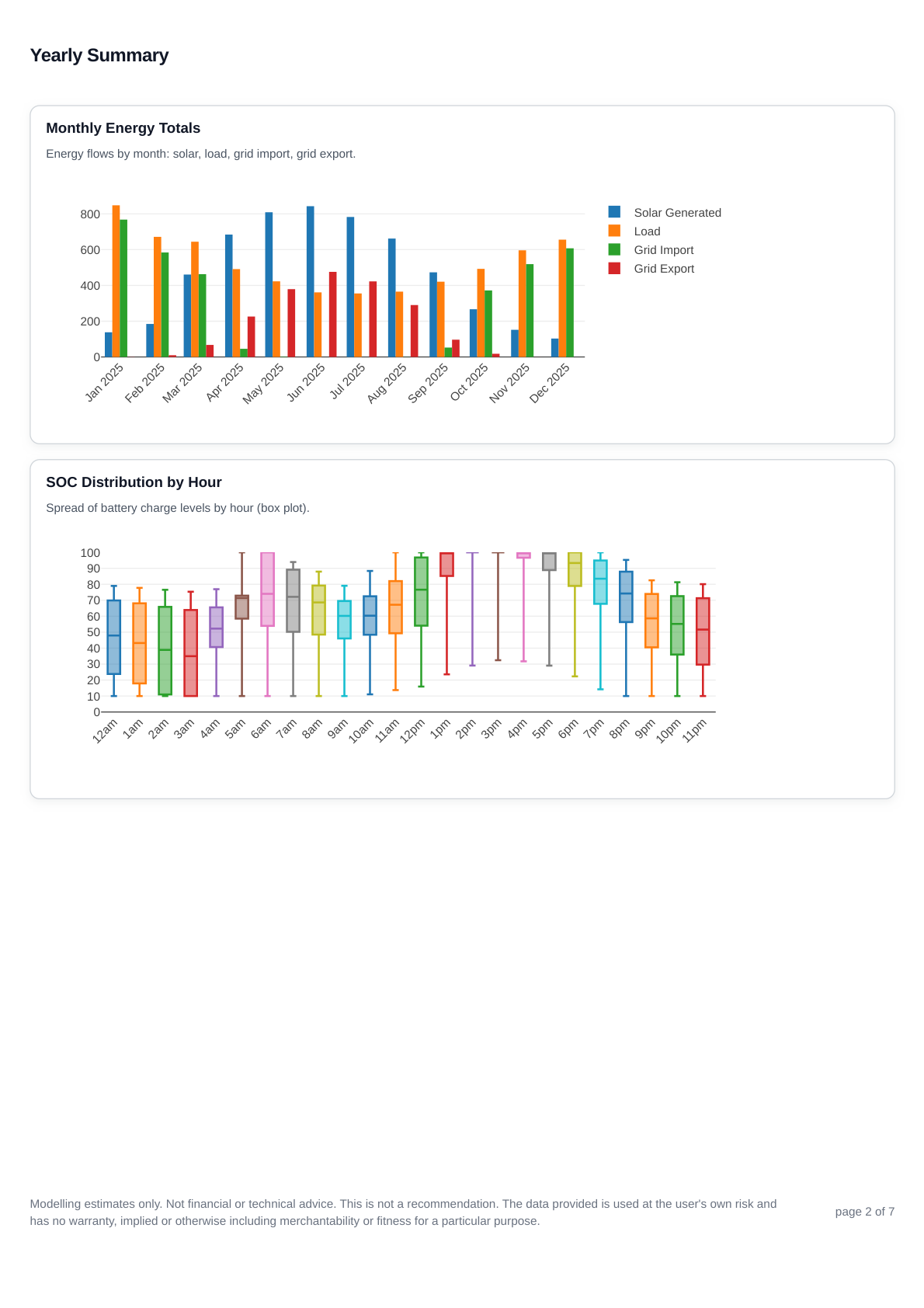
PV output is strongest in summer, while the heat pump's electricity demand is highest in winter, so there is an unavoidable seasonal mismatch between generation and demand.
Charging in off-peak periods through winter and the shoulder seasons helps, because the battery can shift cheaper imported electricity away from the expensive periods and reduce the annual cost significantly.
Install?
In this case, PV clearly helps. The paired reports cut the modelled electricity bill from about £1,943/year to about £537/year, which is a very material reduction for a heat pump-heavy home.
Such a system may cost around £9000 to install making the payback period around 5-7 years. A good investment in my opinion.