Introduction
If you already have a solid south-facing solar setup, filling the north-facing roof can sound like an obvious next step. The real question, though, is not whether the extra panels will generate more electricity, but whether spending a bit over £6,000 on roughly 12 more panels is enough to make a worthwhile financial difference.
In this case, the home already has 10 south-facing panels, a 3.6 kW inverter, and a 10 kWh battery. That matters because the existing system is already doing a lot of the work. For this level of household electricity demand, the results suggest the added north-facing array mainly increases export rather than delivering a big jump in on-site savings.
These reports were modelled using our solar calculator: open the free Solar Butter solar calculator, which is free to use with no sign up required.
Baseline Model
Inputs
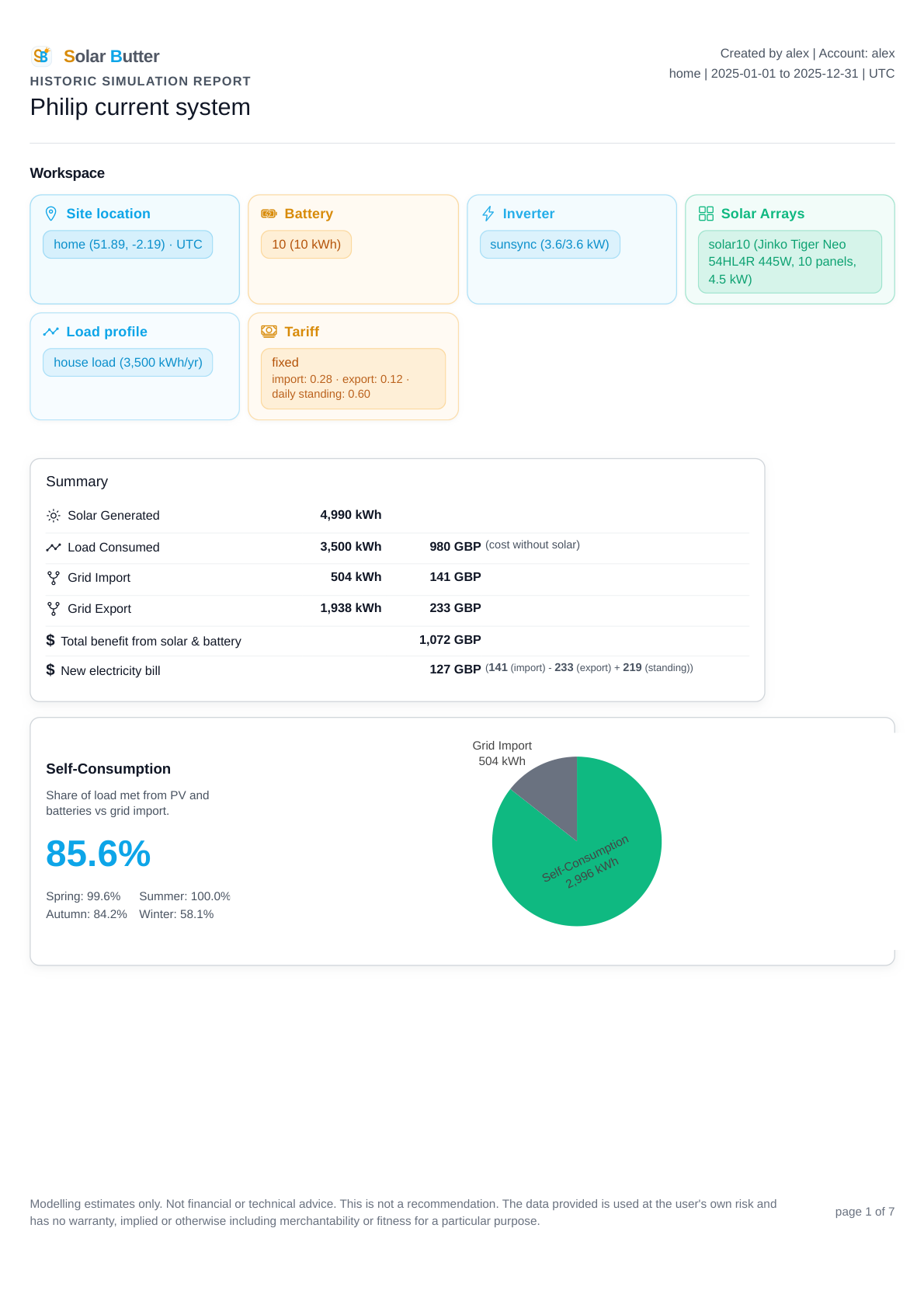
- 10 south-facing panels at 4.5 kW
- 3.6 kW Sunsynk inverter
- 10 kWh battery
- 3,500 kWh/year household demand
- Fixed tariff: 28p import, 12p export, 60p/day standing charge
Outputs
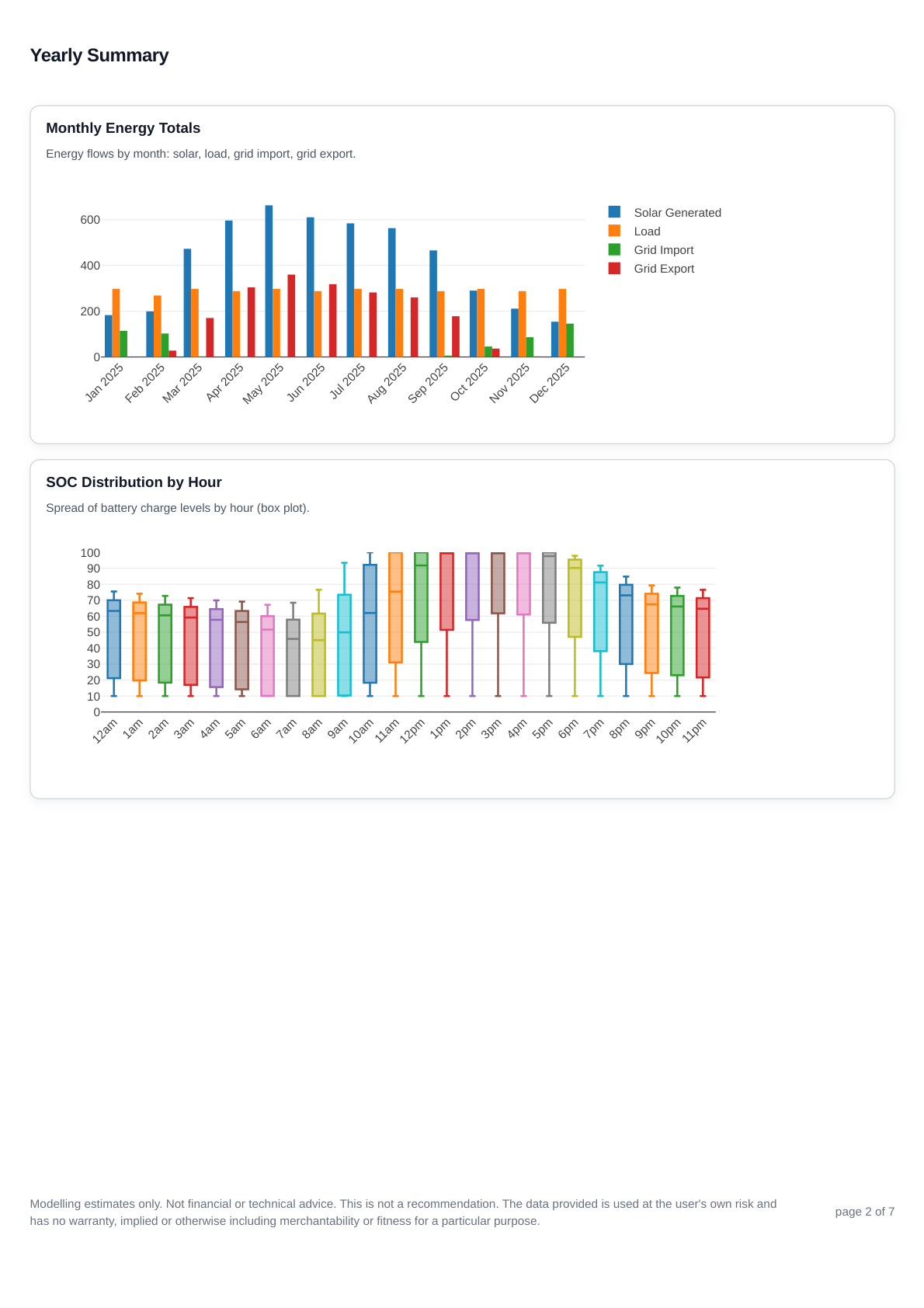
- 4,990 kWh annual solar generation
- 504 kWh grid import
- 1,938 kWh grid export
- 85.6% self-consumption
- About £1,072/year solar-and-battery benefit
- Modelled bill of about £127/year
Optimisation Model
Inputs
- Keep the existing south-facing array and 10 kWh battery
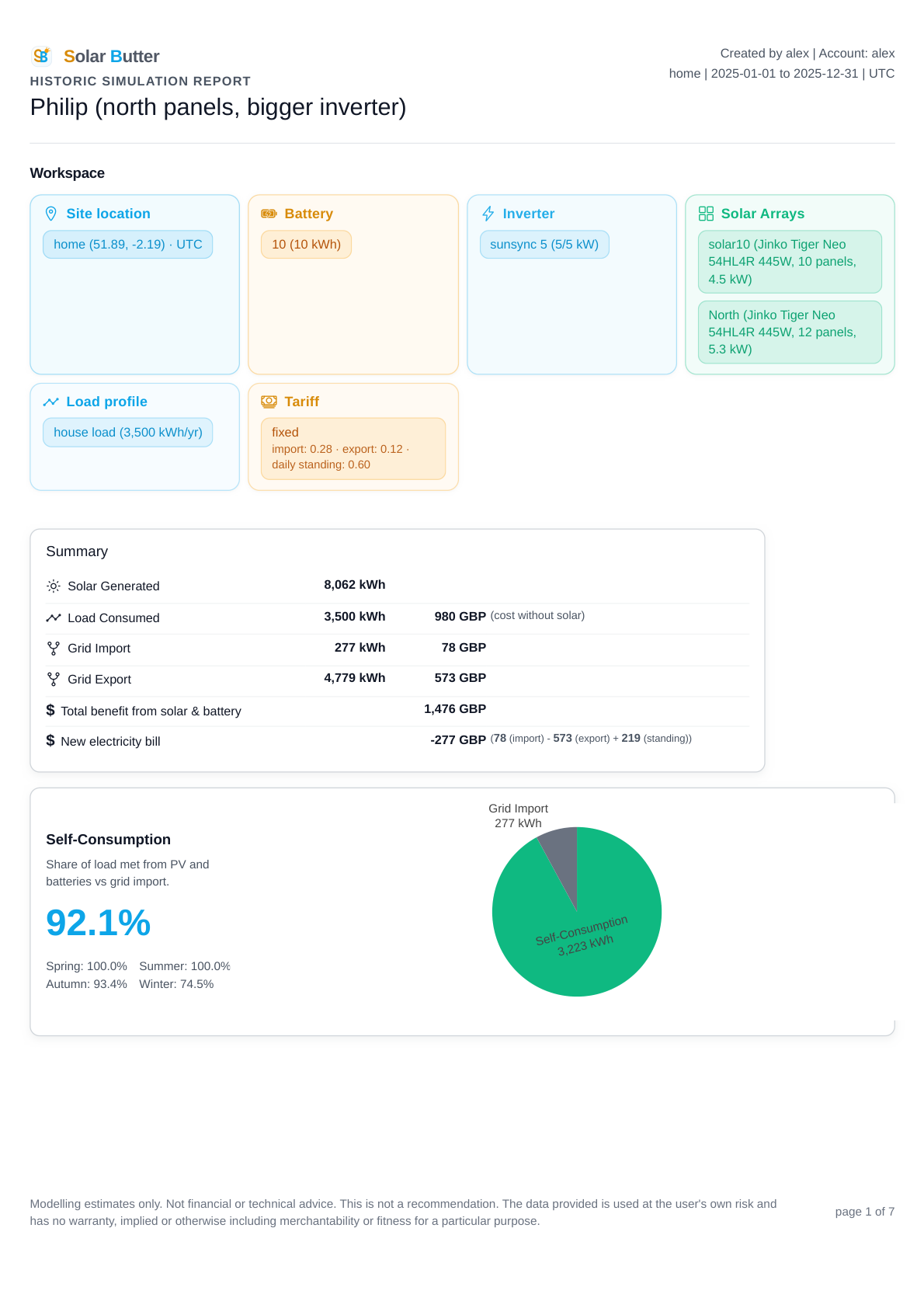
- Add roughly 12 north-facing panels
- North-facing array sized at about 5.3 kW
- Upgrade inverter from 3.6 kW to 5 kW
- Same fixed tariff and household demand assumptions
Outputs
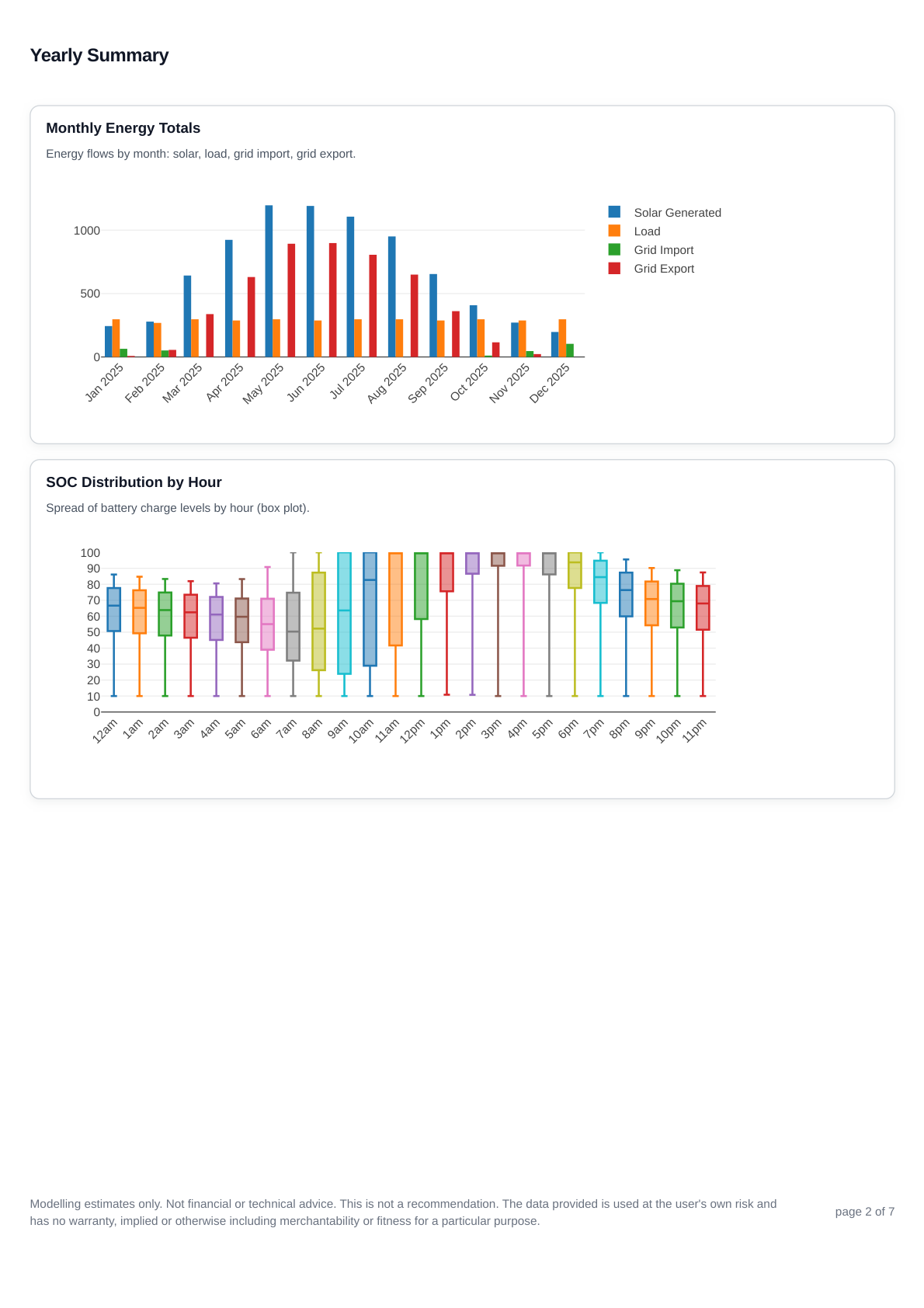
- 8,062 kWh annual solar generation
- 277 kWh grid import
- 4,779 kWh grid export
- About £1,476/year total benefit
- About £404/year uplift versus the baseline model
Comparison
£1,072/year benefit
4,990 kWh generated, 504 kWh imported, 1,938 kWh exported.
£1,476/year benefit
8,062 kWh generated, 277 kWh imported, 4,779 kWh exported.
About £404/year
Most of the uplift comes from extra generation and export rather than major load reduction.
Install?
Most of the value comes from export.
The period may be around 15 to 20 years, but depends heavily on how long the export tariff remains.